MSPs in Conversation Watch Episodes
23 January 2026

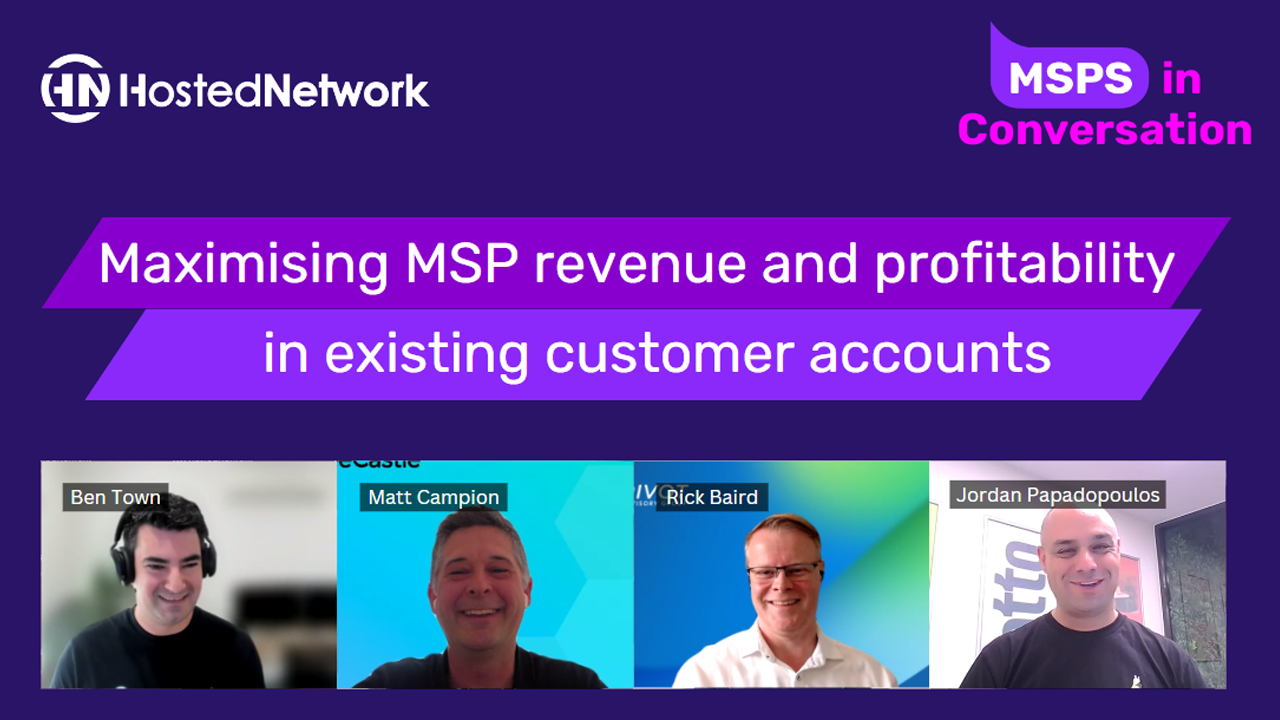
Maximising MSP revenue and profitability in existing customer accounts

Did you know that it’s 5X more costly to acquire a new customer compared to keeping an existing one?

Maximising MSP revenue and profitability in existing customer accounts

Did you know that it’s 5X more costly to acquire a new customer compared to keeping an existing one?

In our upcoming MSPs in Conversation, we’ve got an exciting discussion lined up with Matt Campion from BeeCastle, Jordan Papadopoulos from Otto IT and Rick Baird from Pivot Advisory to share some practical strategies on how you can maximise MSP revenue and profitability within your existing customer base (Customer Lifetime Value or CLV) whilst improving their customer experience (CX).

Key discussion areas:

• Establishing your MSP/TSP as a valued and trusted advisor to your customers • Nurturing existing accounts and identifying opportunities in white space • Developing meaningful, long-lasting relationships that go beyond sales transactions • Dealing with unprofitable clients • Shifting the conversation and client perception of IT from expense to value-driven engagement

Key Takeaways

Growth Is Hiding in Your Existing Customer Base

For most MSPs, the fastest and lowest-risk growth comes from existing customers. Expanding services within current accounts is more efficient and profitable than constantly chasing new logos.

Data Reveals White Space Opportunities

MSPs often under-serve customers simply because they lack visibility. Using data to understand service adoption, risk exposure, and usage patterns uncovers clear opportunities for deeper engagement and revenue uplift.

Strong Account Management Drives Profitability

Regular, structured account conversations help MSPs move from reactive support to proactive value delivery. Customers are more likely to invest when discussions focus on outcomes, risk, and future needs — not just tickets.

Standardisation Improves Margin at Scale

Consistent service bundles, repeatable processes, and clear packaging reduce complexity and delivery costs. MSPs that standardise what “good” looks like are better positioned to grow profitably across their customer base.

Value Expansion Beats Price Increases Alone

Increasing prices without increasing perceived value creates friction. Sustainable revenue growth comes from aligning services to customer needs, demonstrating impact, and expanding value — not just adjusting rates.

Read the full transcript

Auto-generated from the episode audio — may contain minor errors.
alrighty hey guys and thank you for joining uh this month's uh msps in conversation uh today we will be talking about maximizing MSP Revenue uh and profitability in existing accounts uh a couple of months ago we did a one focus more on inbound and sort of new new customer acquisition and based off feedback we will be talking a little bit about the the other side of the fence you know going deep with existing customers uh so uh with that in mind a little bit of house keeping uh if you don't know who hosted network is already uh we are a wholesale cloud and provider for Aussie msps uh we started as an MSP ourselves back in 2003 and we're celebrating 10 years of being a 100% channel uh since 2013 so um it's been a ride uh and we love working with our partners working hand inand to not only grow ourselves but grow our partner community and their businesses as well um you know our focus is delivering cloud and the way it should be and our guarantee to our partners is to always have you back so but with that in mind enough about us we're here to listen to our amazing uh guest speakers today so um thank you Matt Jordan and Rick um Matt mate do you mind introducing yourself and be Castle yeah sure thanks Ben thanks for having me today on the panel really looking forward to the discussion um hi everyone Matt Campion head of product and go to market at bastle um bastle helps msps with account management through data analytics so we help msps um solve problems such as Whit space opportunity and further engagement with their customer so we take a really a data driven approach to that so really looking forward to today's discussion thanks man cool thanks man and uh Jordan welcome back second time thanks Ben thanks for inviting me back obviously I said something intelligent last time which is excellent so um uto if you don't know who we are we're in MSP our head office is in Melbourne and service clients uh pretty much across the country uh we've got roughly 35 Staff and service a range of verticals and um yeah happy to share whatever knowledge we can wonderful and thank you Rick um welcome for your first time certainly is thanks fam for the invite it's been really a privilege but um I'm Rick B I'm from the managing director of pivoted Advisory Group so I've been working in the industry for about U with him msps and tsp and dises for the last 25 years um pivot advisory partners with msps and tsps to and and businesses to offer virtual CTO or CIO and fractional CIO services and it's really about changing the um the approach and aligning an organization's technology and business objectives through strategic road maps and program management cool well thank you guys um so today the and actually before I a little note today's uh recorded it will be cut up as a webinar uh it will be uh distributed as a podcast available on Spotify Vimeo YouTube all those sort of um things so if you do need to drop off or you want to share it around afterwards um please feel free to do so um I meant to mention that earlier but anyway moving on um today we're talking about maximizing Revenue you know realistically we're talking about going deep within your existing customers um you know I I actually got some honest feedback from a partner um they called me after listening to the webinar and I don't know whether he's on here um but Al if you are um you know we don't ever say we don't listen to feedback um we um uh the feedback that alist gave me was that you know it wasn't we focused this the last sales webinar very much on new business acquisition you know um hitting the phones building a sales team and sort of you know driving hard from the new business uh and that's certainly part of it and today is not about um uh you know discrediting that side of it but it is you know one side of the coin and so the other side of the coin is really focusing on your existing customers right going deep with them um so today we want to be talking around the you know the the strategies and some of the um the approaches uh that you can do to maximize um what you've already got right and in a lot of ways I think that's more natural for msps um you know starting as a tech myself and starting you know in the MSP space um most of you know I certainly but most people in the MSP space that I know started out because they wanted to help people um they you know they enjoyed that aspect of it uh and you know this is more natural than sort of that you know that hard sales approach um for a lot of people so um with that in mind let me stop sharing and we will jump right into it so um Jordan I might start with you uh just from for of setting the tone um from a foundational perspective but what what does maximizing Revenue in your existing existing accounts mean to you um well there's a few ways to look at it and you know one is how do we increase our wallet share of of what the client has with us but our approach is is first and foremost a couple of things you mentioned there was um keeping it natural and and helping people and that's really what we stand for is if when a client U is is speaking to anyone at Auto what we want to see is a good genuine conversation from us to them and that's how it's received and ultimately how do we then help them overcome different challenges and roadblocks they may have and if we're doing a good job of that the new services or Solutions or projects all of that will come over time and and definitely we're driving to to achieve that Revenue but the first uh step to that is how do we maximize you know what we get out of a client how do we help them and how do we maximize how much value we can add to them to help them in their business cool okay and so with that approach do you approach that differently from acquiring new customers to you know to existing customers there are some things in terms of the process it's a little bit different but in terms of if it's an existing client or new client the approach is very similar like we want to know if it's a new client we want to understand them their business what are the challenges they're facing where are they looking to go you know all of that sort of information is you know business related questions and then the account managers still need to be having very similar questions we need to be evolving from those conversations and continuing that on the more that we understand about their business the the better we can partner with them in the past we would get feedback such as you don't know our business you don't understand the challenges we face and it was true like there was certain conversations that we just didn't have and um and having those types of conversations builds trust so it is a little bit different but the approach is very similar it's focused on understanding them the challenges the goals and how can we show a link between where they're looking to go and uh the solutions we might be recommending what problem is that going to remove and then that can clearly Define or demonstrate an Roi for them okay so do you it certainly sounds like an a knowing Auto um it you I think you're humanizing technology that's it I was trying to remember it and it's actually on your poster behind you right so that's I guess that really digs into that that natural aspect of it um do you find that that's a differentiator for you do you think the market is doing that from what you see yeah and it's it's funny because you know one week we were two brands the next week we're Auto humanizing technology But ultimately that's who we are and it was just that when we rebranded so one of the challenges we found was you know we wanted to demonstrate value we wanted to build credibility of who we are and what we're looking to to achieve and what we're presenting to the market didn't necessarily align with some of the messages we were delivering as people so we went through a process of understanding who how how we perceived from our clients from our staff what what what we were seeing in the market uh and it taught us a lot and that's where um you know Otto came from that we wanted a name overwhelming the feedback was when people thought of us whether it was Milan Industries or dwm it was the people it was about the relationships it was how we engaged with them the trust and so forth so um that's where that came from and and and and Trust really underpins everything that we we do so um yeah rebranding and and changing how we went to Market with some of the the messaging just helped reinforce who we are as as people at Auto cool it sounds like you guys have really um uh you know latched on to to that and you know gone deep yourselves which is really good to see I've realized I'm I'm looking up here at my other screen so I've moved you guys down here so don't look like I'm staring at the roof um Rick so with this with that in mind um your experience working in an MSP but in also within you know pivot running pivot advisory um what what has you been the most effective approach from you if we think of it as a strategy in your perspective well I think it's really changing the narrative with the client so I mean was you know when you go into to work with them you want to look at it a taking a high level strategic overview of the business as a whole so rather than just focusing on the tech looking at where they operational inefficiencies are or any issues they have um but you always want to try and take a current a a point in time reference so you take a current state overview and then understand what the business challenges are from every aspect whether it be Hardware capability education awareness any any dimension of the industry and then how do you look at a future state that aligns with their you know business objectives their future goals and then just mapping that out in a um in an Engaged environment and I tend to find you know small we we all a Time for both clients and the msps to get you know the air time so you kind of need to put the set the scene correctly where you you know everyone's got their phones and laptops put away and you're sitting in in some sort of Engagement where you you know run through a workshop and be able to discuss the business their industry and where they're looking to go so it's really taking the conversation around Tech focused and and just how you bind the business technology objectives together see um I like that focusing on the business aspect rather than the technology I certainly know that was a lesson for me that I've shared on uh the MSP and conversation a few times where um we we brought a we were one of the first companies in Australia to bring all flash to Australia but tech for you know storage and I used to love talking about all the bells and whistles it took me way too long to realize that people didn't give a yeah they well that's it but they cared about you know okay well if I'm G to focus on it we'll focus on the you know what are the outcomes what what are the business aspects of it anyway always a you know hard lesson for me it probably took me about a year and a half to actually realize that but um talking back to to Jordan you mentioned a second ago that um about onboarding um do you and Rick any this is really an open question but we got a little bit of feedback I'll stop screaming quite as loudly um the from a onboarding perspective is that strategy that you've talked about Rick do you guys think that that is just from an onboarding perspective or is it something that needs to happen consistently um aligning business discussions around like for us so what we found was that when we compared the market to us um overwhelmingly like you just said most other msps talk about tech problems where we talk about business problems and um you know we found that there was I guess the what resonated for a lot of our clients was that we had uh really good personalities we were creative we're interesting in the way we did different things um and we weren't were not led by Tech it's our people that lead what we do and we don't want to rely on computers we want our people to use their brains and be empowered to go out and come up with ideas or fix things and um one one of the questions that we asked one of our one of the business owners one of our clients well we asked a few a lot of them but was what animal would you associate with um with your it partner and um and you know some were saying line some were saying all different one of them said giraffe which was interesting right and we then we asked her I said Rose why did you say giraffe and she said well you guys are prepared to stick your necks out and put on the line for us and um and do what you need to do and so that that really hit home in terms of um that's what we do you know we care about our clients we care about their business and that's what we want to focus on we want to see them grow uh and and be part of that and we do that through understanding their business and all the way through that's we we've got a process from the beginning there's a a journey that's mapped out it doesn't matter who you are in the business you know what our journey is for a client from the first discovery meeting through to an ongoing engagement um once they do become a client there's a cycle that they go through we've got a strategy that focuses purely on the relationship aspect and the the types of things we should be doing part of that is the sort of those vco strategy discussions that that Rick might have part of it might be just how frequently should you catch up with a client for a coffee or get them along to an education session or lunch and learn or whatever it might be so being really focused on um the the relationship is critical from an account management perspective and then um also having having targeted personal or people within our client's business that we want to have relationships with um there's three or four there's four personas that we want to focus on building those relationships with and then on the flip side from an auto perspective we want four different people from within our business to have those strong relationships so we don't have that single point of sensitivity around if someone leaves from either side we're exposed so and there strong relationships in that way I think just to add to what Jordan was talking about there I think you know you know utto is a really great example of a pretty mature uh and deliberate approach to um you know client engagement and I think that you know there's a blend here that Jordan's talking about that they execute really well on which is you know the strategy the process uh and then I you know probably there's a data element as well that uh at some point Jordan you perhaps you might re review data um on those as well but they're blend it sounds like they're really blending you know all those elements together to you know make sure that those relationships are growing and that's a lot of the best practice that we sort of see with the our partners um and clients as well so Matt give me a bit of an example of that that data approach yeah it's um I mean it's becoming more and more prevalent that that disciplined approach to looking at either segmenting uh the customer base or um the the aligning as Rick said before around having a deliberate strategy if not for a 12 month or could even be broken down into quarters um it could take a particular focus of a segment of the customer base could be an industry could be um could be a segment of you know um you know sort of higher clients versus sort of midte clients and then using the data to uh validate that those hypotheses are are right that they might engagement might have dropped off with some of the customers around the middle so they use um use data to validate that and then also to then test that the strategy is working so like Rick said at the start so a current in a future state so they could sort of Benchmark okay currently we've only got so we've got 15 20 meetings a month um our goal is to get to increase that to say 35 and then they can come back at the end of that uh end of that time period and then say okay well our engagement so that's you got you're blending the quantitative with the qualitative Jordan talks a lot about the quality of the conversations which is so important um and then sort of blending that with some of the Cadence as well on the on on the numbers as well so is that sort of an example of um you know uh making sure that all of your customers sort of get the right amount of I call it love um based off their their revenue is that sort of the thing that you're talking about yeah yeah the you know the the terms that we sort of here sort of um you know commonly used you know it could be account coverage um level of Engagement which could be proportionate to you know again that tier but the most successful and the most um the the you know msps in the markets you know like autos and others are taking a really strategy Leed and you know customer engagement approach um which then they sort of mirror sorry um blend together with then the way that they execute that so it might be based on different dimensions of that um relationship Okay cool so um we'll jump back to the Strategic or the strategy piece of it because um Rick can you tell us in your opinion what what is the best practice from a Str strategic perspective well I me it's leading on to that previous points and what the what Jordan mat had brought up this is about a partnership and strengthening the partnership with client so it is it is an IT of approach because you think about any business any industry you've got environmental Financial technological people human capital changes they they happen all the time so you really need the strategy needs to be an an iterative approach and it could be you know 12 to 18 months I tend to find that 180 months is actually a good timeline if you go depending on how how deep you go in your Discovery um and you might you know even align your Discovery with your clients because you don't want to overwhelm them either um and you don't want them to go through change fatigue so you might sort of break it down into you know tailoring your workshops to their operational maturity level of the client or their size or their industry type or you might make it a topical um discussion whether it's about business pro process um efficiency or whether it's data classification but either way that sort of strategy the Strategic approach is to make sure that you have a good blend of you know whether it be sea level Finance operations you know technical teams any client facing teams and get some of those Champions together in a room because you know you tend to find the people that the at that sort of second tier and team little leadership levels really on the front line they understand the business's challenges and so you know it's a good it's a good opportunity to bring Innovation through or have Innovation Bubble Up From The Bottom and and have you know the sea level engaged with all the teams as well as yourself and and being able to clearly identify and articulate really what are the key objectives the business so it really brings the teams together but um I think the other important thing is we all become very excitable to run these engagements and as a consultant you can get carried away you don't want to sort of lead the client down the Garden Path so it's really important to not try not to listen with the intent to respond but actually listen with the intent to understand what the challenges are fully and what the impacts are um and and literally just listen just ask the questions and document in their words what they're what they're looking to achieve and what their struggles are okay and so I mean today's topic being you know driving additional revenue from a pipeline generation sales pipeline generation what do you see with that sort of approach versus yeah not well the thing is is that instead of the view of the instead of your clients viewing an account manager as someone trying to sell a product or a service you're actually aligning what you're going to offer and you and tailoring a package to what they actually need and and changing the conversation away from a transactional one to more of a functional one you know what do we need to do to get there and we tend to find that um from a sales pipeline point of view particularly on the MSP front you know you're dealing with real opportunities that are have been discovered at a high level um that you can then take the client on the journey so the client gets you know some predictive um budgets and forecast ing they know the direction and and the path they're going to take with the MSP in Partnership um your account managers are not sitting there in sales meetings trying to identify what opportunities are going to close for the quarter because the road map's there it's predefined so it solves three actual major problems that some msps might face is generating consistent pipelines with existing cents and new business then creating enough Project work that consistently throw flows through the project teams rather than having a lumpy project cycle and from a support point of view at the very front end you're proactively trying to solve recurring it support requests or recurring issues that keep hitting the support desk all the time and you can actually reduce the amount of load that's on the support desk to you know focus on quality closure of cases rather than having to keep hitting your head against the same thing every time so it solves the end life cycle quite well okay and Matt um I know from your side from an account management with you know B castle being the tool that it is um how how do you find that account managers can leverage that to hit their targets yeah I mean the the way that you know Rick sort of paints a picture there is and is around this sort of a road map approach so and I think Rick sort of said it pretty well where we you know you know people are not selling product they're not you know it's not that transactional it's much more as Jordan said understand a deep understanding of their business and those business problems and then when you blend that when you do eventually you know understand the problem and you know then the solution comes or a program of work ultimately down down there yes there's technology to solve that um you know one of the things that a platform and you know sort of the maturity of uh account management as it's moving forward now is using data around understanding the perhaps a solution set so a tech stack that they might have and gaps in that and mapping that to strategic problems or strategic objectives that they that they are trying to achieve so um you know that again data can supplement and really enable um visibility um greater understanding and Analysis of you know providing the the pieces of the puzzle that then you know you know form together the technology to solve those business problems okay so you know my understanding of what you guys are are talking about is I'm going to use the term going deeper with the customer to understand their business right so that um does this pipeline that you know this can potentially generate um how does it help with the conversion of said pipeline Jordan would you like to take that one Jordan that I I can set up so how does how does bastle help with the conversion no just a strategic approach that when you're you're understanding your customers needs does that help I mean it could be a yes or no answer but does that do you find that helps yeah yes is the answer um because if you understand their strategic objectives yeah um and you're presenting a recommendation hopefully it's aign to those objectives and you can demonstrate how it's going to help achieve those more efficiently or you know what the what why is it a benefit why should they do it right so if we go back maybe five years ago we used to the the account management strategy was there was a there's an email box an email would come through and say hey I need this right and the account manager would put together a quote and send it out you know and flip it to now it's all about understanding their needs and you know the sales we're doing back then were minimal compared to to where they are now so um we um know that there's opportunities we identify today that aren't going to close today or next week or next month it might be something that's six to nine months away and that's okay but that's all part of filling up that machine and getting them coming through the funnel so that over time time uh they will come out the other end so but and that's just through those conversations with a client understanding where they're at they may have large projects that are going on today they still got objectives that they're looking to achieve over you know Rick said 18 months you know it could be in the next nine months 10 months 18 months whatever and um but at some point you've been having that conversation and and knowing that there's a challenge that they have and then once they've got that internal capacity then bang you're there you can get it converted so it's it's critical to convert especially the bigger project selling small you know laptop refreshes or whatever it might be that's going to happen so yeah and that's the feedback that we see from the community um you know our community as well is like how do we move from that transactional you know into that sort of um that larger body of work um uh fuzzy Just Dropped In which he's just deleted um never mind I was about to read it it's gone but um what he was saying is that building that pipeline uh is critical for an MSP really right for any any healthy organization um and to to repeat your words Rick um actually using their words there you go um using their words you know back to them really really can help with that as well right um Rick you're gonna say something I think it resonates um repeating using the client's words resonates with them and their industry so it it shows them that you're actually paying attention you shouldn't have to pay attention if you're actually paying attention you don't have to prove that concept so by coming back to them with their words and and aligning what the objective is but is is important but I think you know to what OT was mentioning um you become more en entrenched within the business the client sees you as a partner it doesn't and almost a member of their team they don't see you as a supplier as such and I think it's important because when you do the 18mth road map or a 12mth road map whatever that looks like and it's up to the client to determine how much appetite they have for change and what that that duration looks like the key thing would be to then prioritize the objectives in a way where it's high medium low or 0 to 6 6 to 12 12 to 24 months because when you go to put these strategic plans together there are things that going need some alignment you need to put some sort of logical sequence you don't want to be doing a vulnerability test if you don't have a password policy if you don't have the right hygiene from a cyber point of view otherwise you your investment's not there the same with data for classification you don't want to go down a a sort of Information Management piece if you don't even understand the existing infrastructure how the client manages the information which systems they they manage them in so there's there's a bit of sequencing that makes logical sense to the client so but and and it looks like a journey to them they go well this is the end game this is where we're going to go and the way to get there makes sense to them and and and using their terminology and dumbing down the technology um and it's so hard to do not use you know acronyms and Technology speak but trying to you know allow them to fully understand what you're trying to plan I think tends to it doesn't it's almost like the client doesn't even question the value proposition when it comes to closing they just see that they understand that this is what we're trying to achieve and they tend to go with it one one thing just to add to Rick's point there and the this is um so we're talking about understanding and relationships through we we've done a lot of data analysis uh and I mean I know it's pretty intuitive however we've seen a positive correlation between activity levels and revenue uh as well so our customers our our users of our platform um so um MPS and account managers so often um you know that it's that age of one if you're not talking with your customer you don't understand their problems right so um and and this is you know this is again relative and proportionate to the segments of msp's customer base right so you know you may sometimes they have um a a smaller set of customers in that lower end the the best practices we see is the types of activities that towards that but again it's not done in an ad hoc way it's more strategic and follows whatever the overarching strategy is um for the business but yeah it's yeah sorry John you go I was gonna say I think you said about the repetitiveness and you see if people are doing them more they're getting better results that whole thing of where where focus goes energy flows and the more you're doing that the more the better you're going to get it the more you're doing an activity you're always going to improve right so if you become congruent in everything that you stand for across Ross you know all your activities and um you're going to get better outcomes you're going to make mistakes you're going to get it wrong but you just keep on doing it and just being consistent and um and people know what to expect and and and you will get the results and there's there's stakeholder byy and there's you know accountability on both sides if you're both going on the journey together both the MSP and the client then there is an alignment there that that's not questions so you know you might do a discovery piece and do it you know with a 12 month view and you will meet with the client maybe doing a qbr and you know it's important to run those on time make sure they actually happen per quarter but even as the program management the roll out of the road map continues I tend to check in with you know the stakeholders on a monthly basis just to just to keep your finger on the pulse where the challenges are what the risks are any variations um and because you're in front of the client in you a regular Cadence I tend to find that there's about 30% additional projects that come outside of the initial discovery that build your pipeline because they just see oh hang on this guy's in the business now he's trying to help us um improve and and grow and by the way here are some extra things that have come up can you help us with that and all of a sudden instead of being the IT guy you're just you're their strategic partner from a technology and operation side and yeah you get so much more out of it after the initial Discovery yeah one other thing so I think one thing that's helped us with that is a lot of other business have a lot of other partners like all of our clients have Partners they work with and so it's understanding who are their Partners so you know we want to know what does their child look like who do they engage and how can you reference the type of partnership they bring is the same as what we bring so whether it's a HR partner or their accountant or whatever it might be the other important thing that I don't think any of us have touched on is one of our learn learnings was and I keep going in and out of focus so apologies it's this dodgy camera is I need an IT company to get me a camera here but um one of the things that one of our learnings was um that the the strategy that we had was great it was really good we knew that if we did it we'd get good outcomes and revenue all that sort of stuff but it didn't work for every client even though if they had high Revenue it didn't necessarily mean they would be suitable to what we wanted to do they may not have had the resources internally to be able to you know deliver the projects we wanted to deliver or just their maturity level may not have been where it needed to be so that was one learning we took away and needed to even though they're at a certain level from a REV perspective we needed to look at how do we segment those clients a little bit differently I agree with Jordan you kind of you need to adjust and tayor the workshop engagement or engagement the discovery engagement with the client size maturity level in Industry um you don't want to be spending two half day workshops with a SE level team um going through you know over a 100 questions if they don't have the appetite for that in fact you you it sometimes becomes a little bit overwhelming so if you break it down onto even maturity level you know start at maturity level one let's look at this maturity level two we'll look at this in the second year that sort of stuff that that type of approach can also you know redu can actually help aid the the the program management and how the planning ex is executed it's a it's a nothing stays the same right so you know it's the the relationship is consistent and that's where you get those understanding and the trust and um you know the recommendations will be reviewed and those type of things but their business is always evolving so their problems are always evolving and then I think you know one you know sort of being an advocate of a data driven approach now that the I mean the technology is always evolving to solve those Solutions so what we're seeing is a lot of msps are really hungry for data to continually to map those problems with the solutions and make sure that they're um yeah yeah you know providing those um the latest answers to best solve it um so yeah it's yeah it's a it's an ongoing ongoing challenge but always always evolving and you kind of need you kind of need to continue doing it because if you don't do it someone else will come in and do it for you and you potentially have a a challenge with you know client journey is that I mean I know that we've talked about you were just talking about that not every it doesn't suit that this approach doesn't suit every single customer based off their maturity but is is there a sweet spot like if if the you know msps looked at their their customer list would they be focusing on you know their larger ones versus their smaller I assume that would be the case um but what else would we be looking for to focus this strategic approach um you know I I would you do a qbr with everyone sort of thing you know I think you can tailor it down a little bit different different dimensions yeah so I think that you know there's different dimensions that we're seeing so obviously Revenue segmenting by revenue is definitely one but Jordan brought up a great one as well around you know perhaps that organization's maturity level as well which is a qualitative assess Dimension right so you know different msps have you know different elements that they sort of bring to bear to you know group group or have a portfolio or a group of customers and then they um you know what we're seeing is then they're sort of tailoring the level of Engagement and investment in those customers um but yeah what about the characteristics so wa some of the things that we look at will be in revenue is definitely one of them that's y Revenue absolutely we'll look at just the size of their business the size of their the leadership team um you know so if we want to deliver something do they do they have the people to be able to deliver it right because we find that if if they don't it can fall down and then the blame comes to you around you didn't do a good job where it's perhaps there wasn't internal stakeholders to help with that um geographical locations but even just the the whole alignment around as a business there's a psychometric sort of assessment that we do just to see where they align around different um things that we're looking for in a client and and uh and and are they a growth client what are their go one of their ambition as a client so we've got a um just a a bit of a metrics that we've created that we use to to to determine where they sit not purely Revenue the revenue makes you know is big part of it but we've got some clients that have good Revenue but they definitely don't meet many of the other categories and we can't get anything out of them so I wonder how many msps you know thinking back when I ran my MSP um I didn't NE necessarily know what the turnover of those customers were to be able to Target that I just knew the spend they had with me so I prioritized my time and effort based off the spend they had with me for example so it's kind of that you know it's it you know start at the beginning or at least asking the right questions to start you know narrowing it down so where where would you start you know with a customer like this um Rick where in in previous engagement where where have you started before their website their industry that's a good answer Brad street um if you get the background of the business you can find you if you know whether they've got a a board report even if it's not a big business and they're small business they've got a whole ton of deity points sitting on online and their social media feeds you really want to engage with the client and speak their language then that's where you would start because if you go in understanding hey this is what your value propos position is or hey this is we understand you don't have to talk to them about how much revenue they make but you can get a gauge of what their revenue streams are but you also get an an insight to their to the industry and what they're trying to achieve for their clients for example you know you're talking about size Revenue headcount you know that that's all relevant yeah totally appreciate that and you might teor them based on on those on those metrics but sometimes you come across these unusual opport unities where a client might say okay well I've only got 12 people and you think well why would I run a why would I run a full strategic overview with this business well hang on this client's in the medical industry trying to do te Telly health and all of a sudden we've got 50 other agents sitting in their partnership Circle which they're going to deliver services to so your opportunity then changes from a a headcount and and and revenue discussion to Holy there's a lot more opportunity here than than what you would actually see if you were to sit down and talk to them um and then classic one is you're seeing an account manager having a conversation and you say how many offices do you have I've got three main offices you can see on their website but hang on I've got 50 other project sites that I'm actually managing at the same time so all of these data points are sitting there right for picking and being able to walk in and have a a complete understanding then establishes that Rapport a stronger bond with the client because I actually that you you care I was going to say a different word phrase but anyway um and and then immediately the it's it's it's like any sort of partnership you want to know you want to have a a good partnership or you want to do business with people that actually care and and have an understanding of your industry and talk your language and so that's the first place I start um and then then and if it's not already if it's not if it's an existing customer you know just reiterating what you already know and what you already manage and not um expect them to know well you need to be able to know what they've got right you don't want to be going in without the preparation time maybe half an hour and understand what value Services you're providing um so that you don't look like oh you don't walk with egg on your face as well okay let's shift gears a little bit guys um we've talked um a lot around that strategic approach let's talk a bit about the the day-to-day of account management how do we get you know account managers talking these bits you know the these areas how do we get them thinking like this um and what are some of the best practices um Matt I know that you know we've talked a bit about like whites space I know B Castle's got some Whit space functionality and those sort of things to get them thinking about those gaps and start those conversations but have you got any tips around that you've seen um with the msps that you work with yeah so I mean we sort of see best practices around weekly monthly quarterly and then annually AC annual activities so you know on a if we start at a weekly basis you know we're seeing um you know really successful account managers just be really deliberate in their me planning their meetings right so you know it's having the being theep prepared for it and meeting with the right right customers okay so that and that comes back to sort of executing on that strategy they're not going to be meeting 10 times a month with the lower customers sort of you know like a lower level customer um and getting that spread right so you know and that understanding who to meet with is often it's a a bit bit of a um just to get to that position can be a little bit um a data jungle um so surfacing that quicker and then they execute on that so they meet they get the understanding that we''re talking about then we sort of move into other best practices such as you know moving it along into the pipeline so you know just good data hygiene flows through but then that flows into insight to action so that's that's where we see understanding those customers and just following the uh insights along um that a lot of analysis um can provide because let's face it account managers are doing a lot they don't have you know they don't have all day um to sit there and go through Excel they want to get insights and then you know be as Jordan says having real conversations with customers right so being deliberate about the data executing on that in a disciplined way and then using that in a consistent approach and then month after month you get to the end of the quarter and then you can see the pipeline how much they've added to their pipeline through really good consistent engagement they've come across New Opportunities from existing accounts uh and then that sort of builds itself up yeah cool and Jordan internally do you find is well a do you have anything else to add but B do you also find that that's true within Auto yeah having I mean having data is critical and that's always been a challenge of ours and then bastle came along and made it a bit easier so um which is great in terms of having you know various types of reporting and so forth but just keep it keep it simple sometimes we try to over complicate things um you know and account managers like to do like like most people like to control not most people like some people like to do as much as they can and control certain things but it's just only do certain things and there's other people that can take care of certain tasks so being clear on what they're accountable for and what they're not accountable for and um and then making sure we're not spending too much time with certain clients on the wrong activi so um you know that to to get them started it's just start small like just get them doing some small initial activities probably going out there and joining them with on some of the meetings and making sure that the way you want it to to to flow is how they're doing it make sure it's a documented process so that you know what happens before the meeting do they um it's not just the sales data it's all the other data that you might need to provide to the client so can they instead of them going and finding all that information do you have a sales support person or someone else that can help have that information prepared for them and available so it doesn't become a big thing they can just go and see a client and they've got the information they need on hand makes it a lot easier so just keep but as simple as you can for them and also that they need to remember that well we all need to remember that if we're going and sitting with a client they might have one or two or three people in that meeting and that's a lot of time that we're taking up so it's how do we add value so that then when they leave that the client's going to want to see them again because the last thing you want is them to feel or why is this person keep on canceling meetings the pro the reason is probably that they don't get any value out of what you're talking to them about so sometimes we need to just reflect on um how what value did they get so you know doing that could be someone within the business calling and getting some feedback it could be um you know a de breef post meeting with the account manager and just understanding what are we what are we doing but keep it simple have it documented what you want and make sure there's clear expectations is what I would say you mentioned um wrong activities got any um what would you deem as wrong activities is there any specifics if certain there's tasks that people in the business need to do and there's tasks that they don't need to do right so it could be so for example our Sal support person may is responsible for preparing proposals um and we found that maybe an account manager might want to go and prepare the proposal themselves because they think they can do it quicker maybe they can prepare quicker but it prevents them from uh you know making phone calls to three or four other clients and having a chat and what's going to deliver more impact right you preparing a proposal or you speaking to more clients and have building that relationship so that's one one example okay preparation is preparation is key in that sense I mean if you and the other thing is you know account managers can actually drive the value conversation by assuming that the people they're going to meet with or they you know their stakeholders they're meeting with know how to read so having the pr preparation on what the agenda looks like what the you know what are the metrics you don't want to be sitting there almost like a death bite PowerPoint and going through tickets and slas and the rest of it give them that information up ahead um where they can see the metrics and then that then when it comes to the meeting then you can spend some more time on you know reflecting on any of the things any questions they may have about that and then focusing on you know how you can add value and what are the next steps for the business because you can just you can get bogged down with the metrics and it's almost like an MSP Shing well this is how well we're doing look at this it's it's about turning that conversation around to what do you guys need and how can we help you and I think the proof is in the sorry man I was just going to say the proof is in the puding I mean there's it's a pretty well um I forget that numbers just evading me at the moment but you know there's a pretty large percentage of um revenue for msps that comes from existing customers uh on a on a monthly basis so you know it's just that this try this consultative trusted advisor approach is um you know obviously there's a blend you know new business is super you know important and and key um but there is definitely the argument to be to be made that investing in all the things that we've been talking about does absolutely return um the results as well yeah cool and I think that um some of this is very um foundational um it's a found foundational aspect of sales right um you know making sure you've got these processes making sure that you you know you're you're thinking about you know these areas that you're um and in fact if if my advice would almost in in a lot of ways getting this right is actually more important than focusing on new business you know focusing on marketing and things like that getting this right you know so if you're you know if you're thinking about hey I've only got so many hours in a day my recommendation to you would be to focus on the elements that the guys are talking about today because once once those foundational elements are locked in right then everything else gets a multiplier effect um from you know all that effort that you put in you know for what the guys are talking about right bring a new customer in the engine starts working um and therefore you're get going to get more pipeline out of them you know hopefully you're going to have a better conversion rate all those sort of bits and pieces you're going to win more existing customers um yeah there you go f uh focus on the 20% that gives you 80% of your Revenue first you know focus on the you know the ones that that are paying your bills go deep with that and you probably actually find you know when I've talked to a lot of partners that do this approach um that dramatically increases their pipeline in fact I was actually um talking to an MSP that was quite frustrated the sales pipeline was drawing drawing up um and the the the fact of the matter was they just weren't really talking to their existing customers enough yeah uh and that very and I I was shocked at how quickly that turned around for them once they you know they stopped focusing more on new business acquisition and went just deeper with their existing customers and focused on you know everything that you guys are talking about today um so I've certainly seen this firsthand myself um you know it's um you know and and and being a big marketer that I am I I understand where it fits in you know so I think that's you know keep that in mind I know I know msps and like you know you get so much advice and we're running a business so many there's so many different things going on uh and I do say this is a very foundational item um guys we're nearly at time um but I'd love to sort of uh just sort of get some closing comments from each of you um you know is are there you know one or two pieces of advice that you'd like to share um when looking to sort of you know an MSP that's looking to expand their revenue um from their existing accounts um what that piece of advice be Matt yeah sure so I think you know from from our perspective it would be really around doing some of the Discover which Jordan talked about that they've done really well and upon reflection of understanding that Journey picking three he kpis that are really impactful that you can measure and then tracking those over a short time like a defined time frame around growing existing accounts and then refining that so sort of turning that into really really measurable you know everyone's going to have slightly three different metrics um but using that data to then test and measure if that approach that customer engagement approach is working and if it is then they're measuring it this must be why I love this so much because you know being a being a marketer um you know network engineer but you know shifted into marketing data is everything in marketing right um you know and testing and measuring and it's great to sort of see you know hear you guys talking about that relating to you know sales realistically um Rick what what what advice would you give to to sum up oh Matt just pretty much summed up a lot of the really key ones I mean I think the thing is is that you got to agree with the client you have to have the stakeholder engagement so you need to have the right people in the room you need to be having conversation where it aligns with them so yes you can give them a strategic plan of which you think makes sense but one of the things I find useful is to make sure that the priorities aligned with what the client client's perspective is and you know you might come up with a draft first of what the plan looks like and what their execution is going to look like but you'll always get them to try and set those and reset those priorities so that you're all on the same page and as I said before you know simply listening to what the client needs and making sure you deliver on what you promised to delivering and when you deliver that promise um actually following up to make sure that you actually achieve what you set out to achieve making sure solving the problems or you're actually delivering the outcomes cool and uh Jordan any final advice yeah I tell I mean fuzzy put it there you know the 20% that gives you the 80% to do that you need to segment your database and understand so who are the clients you've got and then it's the perfect time of you to start doing something right we're leading into Christmas so you've got an opportunity in an excuse why you want why to meet with clients so even if it's just getting two or three different clients together for a a round table lunch doesn't have to be really fancy get them together just start working those relationships and then um start from there have over the next uh you know what have we got probably eight to 10 weeks maximum eight nine weeks until Christmas right you've got time to put together a bit of a a plan of of attack for the the first three to six months and reach out and talk to people ask questions see what others are doing and get feedback because sometimes you know we come up with these ideas that sound really good but that's in our mind so it's good to Bounce It Off people and um and and just get get some feedback as well yeah cool test and measure um well you know to to with that in mind as well that sort of segmenting and the all the things you guys are talking about really does tie well into marketing as well once you sort of you know um once you get that so this segmentation can actually help you down the line in other areas as well right so um guys I just it just popped into my mind are there any resources books things like that that you guys would recommend around this any guidance online and if you can't think of it if you think of them afterwards we can send it out as an email but is there anything specific I lost you there just any resources that you guys can think of no I I've been reading a book by um Thomas Tonks um that some may his um sort of thought leader in the SAS space this um ex Google guy believe it's called um a date winning winning with data um so yeah that's one that you know I've been um sort of getting through which has been really interesting talking about how threading it sort of data through the entire organization and the benefits from it sure well you go sorry Ryan just B castle um he's got Implement B Castle High pivot advisory and build your process around this and drink some lunch with Jordan that sounds good I think we um a book that I found really beneficial for me was a book called the disruption mindset so it's a audio book as well so that personally got me thinking a lot and I've listened to it a fair few times so that's a good one to to start thinking differently around how you can evolve and change things but yeah and Ste Cy's seven habits of highly effective people I found quite insightful CU you know you think you've been in the industry for long enough and you've sat in front of the client long enough but learning a different perspective on communication and Synergy in particular I found quite useful particularly when you start talking about strategy it is a bit of a different um approach right um from the standard you know MSP sort of model but um you know it does open a lot of doors um guys we are at time um I want to say a huge thank you to all three of you I've got um several pages of notes of bits and pieces so thank you for myself but thank you on behalf of the audience as well um guys we will be cutting this up and we it will be a podcast and things like that uh and we will send out the link to the recording uh and we'll probably list those um those books and things like that in the um wrap-up email as well uh so again thank you so much for joining us it was an absolute pleasure thanks mate thanks a lot thank you thank you see you guys thanks

Related Episodes

See All Episodes

Never Miss an Episode

Get new episodes and live session invites straight to your inbox. No spam — just the good stuff.