20 October 2026
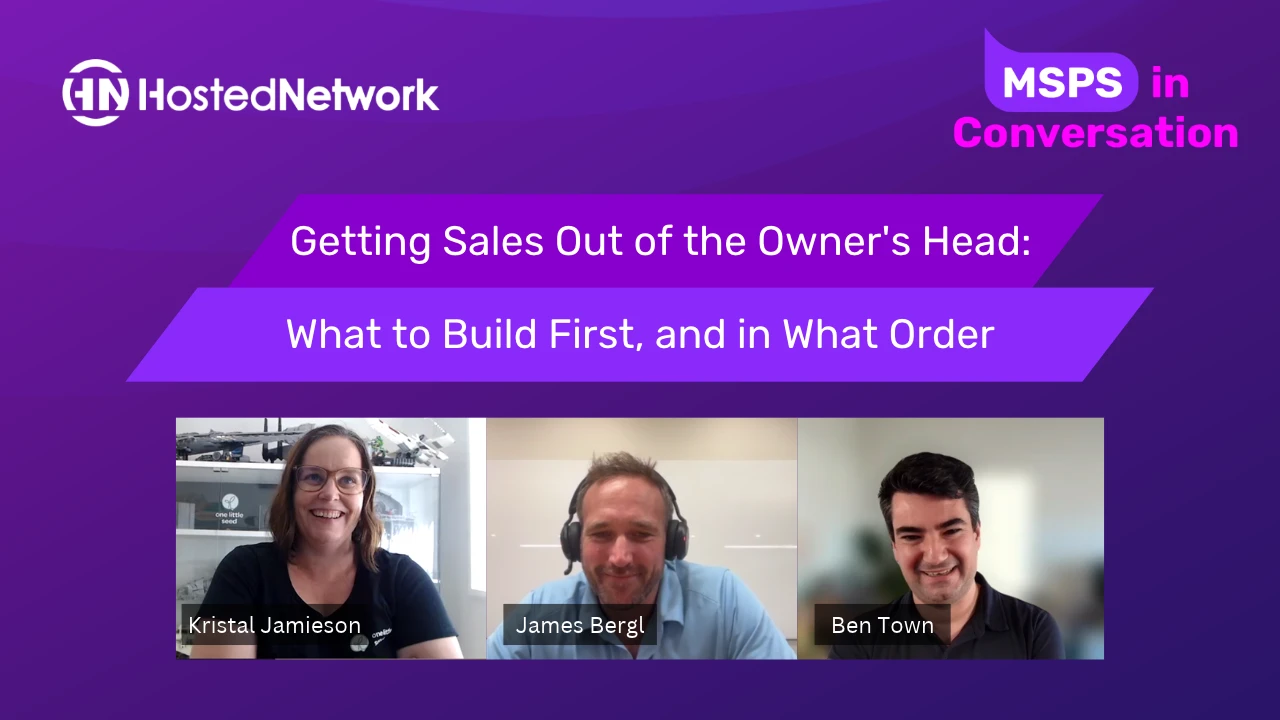
Getting Sales Out of the Owner's Head: What to Build First, and in What Order
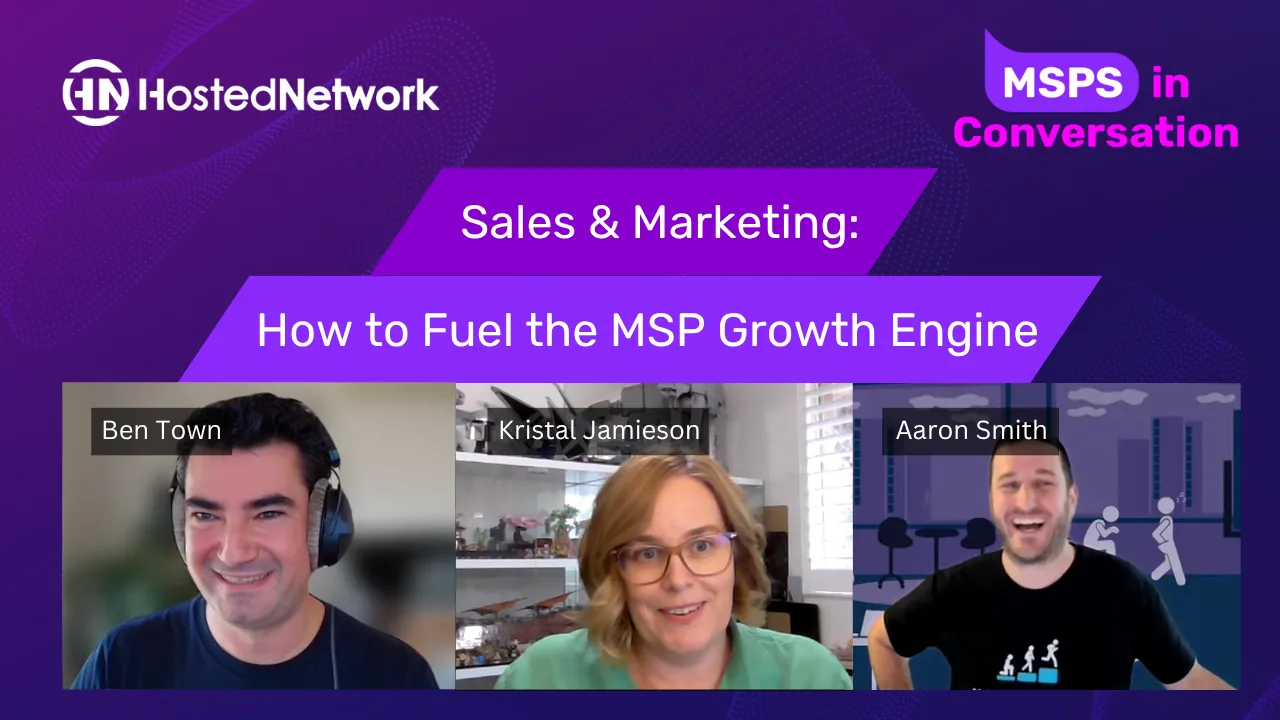
Sales & Marketing

Your sales team is chasing cold leads. Your marketing team is generating interest that never converts. Meanwhile, your competitors are locking in deals you should be winning.
For too many MSPs, sales and marketing operate in silos—resulting in wasted budget, lost opportunities, and unpredictable revenue. But top-performing MSPs are cracking the code by aligning these teams for maximum impact.
Join us for an unfiltered MSPs in Conversation session, where we break down how MSPs can finally bridge the gap and turn alignment into revenue.
Agenda: • Why Sales & Marketing Misalignment is Costing Your MSP – The hidden impact of disconnected teams, missed opportunities, and wasted budget. • Fixing the Sales & Marketing Divide – How to break the cycle of miscommunication, align goals, and create a revenue-focused strategy. • Seamless Lead Handoff for Faster Sales – The key processes and touchpoints that turn marketing-qualified leads into closed deals. • The MSP Growth Stack – The essential data, tools, and automation that drive high-performance sales and marketing collaboration. • Turning Engagement into Revenue – Proven tactics to transform marketing interactions into high-converting sales opportunities.
Sales and marketing are two sides of the same growth engine. When they operate in isolation, leads stall, messaging breaks down, and growth becomes inconsistent. Alignment around shared goals, feedback loops, and regular communication is essential.
Most MSPs don’t actually have a “sales problem” — they have a lead, retention, or process problem. Understanding whether the bottleneck is lead generation, account management, churn, or internal capacity determines whether the next investment should be marketing, sales, or operations.
The fastest and lowest-risk growth often comes from your current customer base. Structured account management, cross-selling, and deeper business conversations unlock new revenue without overloading delivery teams.
Marketing and sales both take time to compound. Expecting instant results leads to poor decisions and wasted spend. Consistency, patience, and incremental improvement outperform reactive tactics.
Growth only works when every department can support it. Strong processes, realistic capacity planning, and aligned tools ensure sales success doesn’t create downstream chaos in delivery, finance, or support.
Edited for readability from the episode audio — may contain minor errors.
Alrighty, welcome guys. Welcome to this month's MSPs in Conversation. Today we are talking about sales and marketing. We've had KJ and Aaron both on before, but we've always talked about these in isolated kind of topics, and so today we are sort of bringing that together. Two sides of the same coin, right?
Today, hopefully my audio and video is actually working correctly, unlike the last one. So if I do have issues, feel free to message me and hopefully I can fix it and be an IT guy on the fly. Before we get started, a little bit of housekeeping. This is recorded as always. We cut this up into a podcast, and we will send out the recording a couple of days afterwards. If you have to jump off, no worries. But please feel free to share this around. It's always a great resource to share with your team members as well that you're trying to bring up. A lot of our partners like to share that with their management teams or their team leaders and whatnot. It is interactive. If you've got questions, feel free to drop them in the chat and we will try and answer them as we go. Don't be nice to our panelists KJ and Aaron, they're used to it. Sales and marketing is a tough gig, so ask the tough questions.
But I will quickly introduce Hosted Network as always, if you don't know about who we are. Quick little plug, the sales and the marketing piece. Hosted Network is a wholesale cloud and telco provider for Aussie MSPs. We service over 250-plus MSPs now, and our value proposition to you is that we help make you more profitable, right? So we only deal with MSPs. So when you engage with us, everything that we do, we're talking the same language, right? So across cloud, voice, connectivity and security. We were an MSP way back in the day, but today we only deal with MSPs. So we have no channel and our sole existence is there to support our partners and help make things more smooth with your cloud and telco needs, right? Smooth means profitable, right? Faster time to resolution, happier customers, everyone's happy.
All right, enough about us. Kristal, Aaron, welcome. Thank you both of you for joining us again. For those that haven't or don't know you already, could I get you to do a quick introduction, a little bit about who you are, what you do, why you're here? And yeah, Kristal.
Thanks, Aaron. And Ben, I think this is going to be a fun discussion today. So, name's Kristal Jamieson, as it says on the tin, as it says on the corner of the screen. I run an agency called One Little Seed. We are a marketing manager as a service provider. So we work within a number of MSPs in this community helping them with their marketing services, working closely with sales. Basically, we are your part-time marketing manager. We look at the strategy. We align with the business leaders in terms of the objectives driving growth and goals. But then quite frankly, we go and get stuff done, right? That is quite often the missing piece for a lot of MSPs: they've got somebody who can say this is where you should go, but then they don't do the doing. Or you get somebody who can do the doing but says tell me what to do. We come in and we make it happen for MSPs.
Cool. Well, thank you. And welcome back Aaron. Mr. Smith segues fairly nicely, I think, into what we do. Morphability came out of, again, also within an MSP for the better part of the last 10 years, for those of you who don't know me. There's a gap within sales, particularly within an MSP. You guys are all phenomenal at fixing computers and doing what you're doing, but have no idea how to build out a sales or growth engine and team. And so we kind of step in to fill that. We work closely with Kristal, being completely transparent. We work closely with marketing because we believe they should be well and truly aligned. Ultimately we are business-growth-focused consultants. And the piece to Kristal's point around getting involved and getting our hands dirty, that was one of the biggest gaps that we saw: too many consultants came into our business, told us everything was rubbish, disappeared for a month, and then came back and went, "Well, what's changed?" Whereas we are actively involved. We take a leadership seat in that sales position particularly, be it general management, sales or otherwise, and help you grow the business, removing and adding and changing and tweaking and whatever it is that your business requires.
Well guys, thank you. I completely agree with Kristal. This will be a fun conversation.
So, wrong slide. I always stuff this up, speaking, being an IT guy. Let me stop sharing and let's jump into it. So I'm going to start with a little bit of a story. I've built sales teams over the years. I've been in business 20-odd years now, and I've stuffed it up more times than I can count. It is a journey. There's a lot of roadblocks that we've gone through, right? And I've certainly learned a lot of things along the way. Be it who to hire first, making the first hire, is it sales, is it marketing, what does that look like? So for those on the call, we're going to have different people from the audience that are at different sizes of your MSP. All right? So ask questions that are relevant to you or where you're at, where you want to go, and we'll try and answer them.
But my story is that it took me a long time to get sales and marketing right. If I think of ours, and we'll talk a little bit about systems, I think I've had five, six different CRMs over my business career just within Hosted Network. Chopped and changed. You know, this isn't working, the new staff member comes along, new salesperson, oh, they prefer something else, and it's always been a tough slot, right, in that sense. And it takes — I talk about the engine, particularly the marketing engine, in some of our other MSPs in Conversation episodes. And so today I sort of want to cover off, how do we accelerate, how do we get to that good point faster without the trial and error? How do we get that engine humming?
So I'm going to throw to — I'm going to start with Kristal — but in your opinion, and this is right at the beginning of the conversation, what do you think, if you're a smaller MSP, you're starting out this journey, you're a principal-led sales, so the owner, they're doing most of the sales, marketing, what is your first hire? Do we invest in marketing or do we invest in sales? And then Aaron, you can argue to your heart's content afterwards.
I think first of all, we're just going to pick up on something that you said. How do you accelerate faster without mistakes? Let's be clear. We're going to make mistakes. Yes, you're going to make them. Marketing specifically is about learning, is about experimenting, is giving things a go. And what we talk about in our organization, and when we're dealing with MSPs, is we are going to fail, but we're going to fail fast. But that helps us refine and learn to get better. So it's great to be striving for perfection, but at the same time, there are days where 80% is just good enough, right? And it's recognizing when that is. Two sides of the same coin.
We talked about this actually — was that last week? Two weeks? I've lost two weeks — where I asked the question. I said, what do you hire first? Is it sales or is it marketing? And there's sort of a conversation Aaron and I often have. People go, "I've got a sales problem." And I go, so a sales problem is you've got too many leads and not enough people to deal with them. Do you have too many leads? And people go, "No." And I'm like, "So then you've got a marketing problem."
And so, how are you setting up your sales team for success? Are you, as owner or founder, sales? Have you got too many leads for you to handle independently? At that point, if the answer is yes — and 95% of the time it's not — then perhaps the answer is sales. But if you don't have enough leads or inbound requests, then marketing should be where you're looking. That is a point where you almost want to break the system and get to the point where you go, "I've got leads. What am I going to do with them? How do we handle them?" Yes, you can bring in fractional to get you across the line, which is where Aaron steps in. But you've got to set those sales guys up for success.
Then I also go, if you're going to roll out a sales guy, people are going to be looking at your website. What does that look like? Does it look as good, as professional? Because we all know you've built a hugely successful business on the back of technical expertise, but you've still got to have a shiny shop front, right? You've got to be able to articulate what that message is. What are the services? What does that sales collateral look like? So yes, I come from the marketing side of the fence, but you've got to have those right tools in your toolkit for a sales guy to be successful.
I'm going to throw out that comment that you mentioned there. Does anyone — and please feel free to jump into the chat — does anyone have a problem where they have too many leads? What's the bigger problem? Too many, or the other way around? Yeah, comment. "I wish I..." I think this is it. Yeah, exactly. There you go. "I wish I had too many leads," from Darren.
To KJ's point, it's sales and marketing. It's not sales or marketing. And I think the bit that needs defining better is, marketing is actually a ridiculously broad sword. Sales is also a ridiculously broad sword from what it can be doing and what it can be doing for your business. In order to have that presence, you've got to have a good website. But you might not be ready for the lead generation events and all those sorts of things that constitute lead generation to increase that, because you might not have the sales processes within which to handle them. And when Kristal talks about what are you too busy with a lot of the time — and this is where it really is sales or marketing in terms of where you start first — one of those first focuses is existing clients. Are you out of capacity to actually deal with your own backyard? Because it's way easier to get new business and start that growth engine running by just looking into your own backyard. That's an account management job. That's a process and consistency job.
But at some point in time, you tick those boxes and then you do go, "Oh, actually, I've kind of ticked all my existing customers and I need leads," and say sales — which one first? There is no right answer to that question. What Kristal and I tend to both do is walk into an organization and unpack and take time. And I think one thing we both agree on is, whatever path you choose to walk, understand what your initial problem is first and attack that and do it consistently. Because if you don't do it consistently, marketing is an 18-month journey. Sales is at least that. Don't expect instant results, because if that's what you're expecting, you're sorely out of luck.
It is a journey. Coming to a conversation I had a couple of weeks ago, somebody said, "Oh, I need to engage you guys. I need new business because I'm churning." And I said, "Shouldn't you fix churn?" That's a sales problem. That's an account management problem. That's potentially a resourcing problem. You're going to invest all this time and money in marketing to then potentially onboard them and lose them pretty quickly because you've got a root cause problem at the back end. So you've got to look at all those pieces of the organization and go, what's working as well, and those processes that are built.
And yes, you are going to change CRM a couple of times as you grow, because everybody sort of jumps into HubSpot generally to start, and then they realize HubSpot is way too expensive and not doing all their things, and so then they pull it back. And this is just the evolution of growth and working out how those tools integrate with your ticketing system, whether it's a ConnectWise, whether it's a data — those are all the foundations. And it may not actually be that sales and marketing is the first hire. It could actually be a sales operations person who's making sure that you're quoting, that everything within your existing house is in order, the operational, security kind of way of looking at it.
Like if you look at each of your departments — and we touched on this before, and something like ConnectWise Evolve talks about it as well — if you score each of your departments out of 10, 10 being absolutely perfect, where are you? What's your finance? And realistically you kind of look at it and go, okay, what's my sales, what's my marketing, what's my support, what's my finance team? And ideally having them level up equally, right? Because you can have the most amazing sales, amazing marketing, but if your sales isn't there — cool, you're generating leads, leads, but you're not closing them. Or sales is generating all and closing these leads but maybe your projects team isn't actually completing the work. Or get down to finance, you're not actually billing it, which is a common issue as well, right?
Yeah, and I think to Lyndon's point in the chat about churn being a good thing — it is a good thing if you are offboarding clients who are not a fit, that are not your TCP, that are not there for you and partnering for the longer term, or are not profitable. Right. But churn, and not understanding where your churn comes from and why you have churn, is a different conversation.
Most to that point — most people, when they first meet with me, sit there and go, "I need to hire a BDM." It is the catchcry that I get all the way through, "so I can go hunting." But in all reality, what inevitably comes out is that you're out of time. You're the leader. You're in front. You are spinning all of the plates in the air and trying to keep things going and not understanding that — third time today — they are literally, we're playing whack-a-mole, spinning plates, whatever you want. As an MSP owner, you're running around trying to keep every single department right without actually understanding which department's got the problem, where if you solve that problem first, your capacity fills up or comes out somewhere else.
Buzzy's being a smartass in the comments, but one of the first things he said to me six months after I started was, "I've noted the noise from clients diminishing." When I stepped in as an account manager there, I just started taking care of people's problems consistently. The sales piece comes by taking care of your customers and engaging with them. And actually, this is where Kristal and I both step in and understand where the problem actually is first, before we start trying to solve it. Whether you've got a leads problem, a retention problem, a hunting problem, an account management problem — I like Lyndon's comment. Retention and growth is a phenomenal place to be, but you can't grow unless you've got someone ready to sort of catch that landed piece of business. And that's in sales and service and finance and all departments. Your business grows faster when all departments are at a maturity level where they can handle that.
Correct, right. We often say when we talk about marketing, how many new clients could you actually reasonably onboard in a month, right? We talk a lot about sustainable growth versus growth at all costs, right? And I reverse-engineered some numbers with an MSP who sort of arbitrarily decided how much revenue they wanted. And I worked that back, and that they needed 375 new names in the top of the funnel every month to get the revenue that they wanted. And I'm like, how much are you going to spend to get 375 new names every month, right? That's high-end enterprise land. Those guys who've got a big well-oiled machine. Your service is going to break if you add potentially that many in at once as well. So it's got to be sustainable. It's not just, "I need leads." It's, what is that flow-on impact that goes down the line as well?
I pointed to this two weeks ago, but this logo was chosen as "crawl, walk and run" for exactly that reason. At some points you are at crawl. You have just got to get ready first and take the time. One of the best consultants we had in, he used the term, "you can pay the pain now or you can pay the pain later." And if you start trying to sprint before you've even got these ones down, you will pay pain later. And to the point that Mr. Vidos has just made in there, if you go and hire a BDM and they start doing what they do really well and throwing opportunities over their shoulder into the business, the rest of the business will be the pain that you're about to experience if those systems and processes aren't right.
Okay, so we've touched on sales versus marketing, and I think to wrap up that question, it really depends on where you're at in your business. Yeah. Right. Now, you've both touched on this new and existing piece of it. Do I — we've used the terms BDM, account management. Talk us through that a little bit, Aaron. And I know that we had this question a couple of weeks ago as well. But what do we hire if we're going to hire sales staff? What does the first hire look like?
Typically, if you don't have sales staff currently, traditionally you are the best BDM. You are the best hunter because it's your business. You're the one that's passionate about what's going on. You're the one that can articulate most cleanly and efficiently your value, of you or your team. So from a hunting perspective, love your work, but you're probably it. What you then have at that point in time is a leads problem, at which point you need marketing help to feed that funnel. But your first hire in that circumstance generally becomes, "I can't look after my accounts." And if that looks like churn, you probably need service-time support.
And that'll either come — traditionally it comes in the form of a sales admin first, who takes care of your quoting, takes care of your admin. You might be slightly paranoid and never give anyone access to your email account, which is fine, but they can handle all the offset stuff to that, where it is just literally, "I've got a quote," flick it to them, they handle it, it goes out the door. It gives you back quoting time and the time that you could better spend elsewhere.
The second hire is an account manager, or a hybrid of those two. A quoting account manager is the other one. But if you don't have those systems, you'll often find an admin-focused person who's got a better customer service experience is better than a pure salesperson. They can come next, once you've continued to retain your customers. It's when you run out of time to retain them that you put the account manager in. You've already got a sales admin in there who's doing all the run-rate quoting, they're protecting your baseline of business.
Well, I'm actually looking at your logo on your shirt as you're saying that, right? So I'm picturing the BDM being sprinting. They're out here, getting their sales admin or maybe some account management to free up that principal, be the owner or whoever it is that is out there doing it already, that's grown the business. Yes.
So, that's touched on a little bit from, I guess, we're starting out. Let's sort of move a little bit further along in the sales and marketing journey. You've got a team, right? We've now got sales and marketing. Maybe it's one person, but is it a right expectation to expect one person to do both sales and marketing?
No, is my answer. Is the short answer. I think it requires — drag it out a little bit longer than that. I think it requires a special kind of person to play both of those hats. Because as much as I'm sure there are unicorns out there who can do both, my area of expertise is on the sales and that side of business growth. KJ's is on the other, and we know each other's respective parts intimately to the point where a good sales manager and a good marketing manager will not compete. They don't need to. They work in combination with each other. They're communicating consistently. Sales and marketing can fit into one department, but you've got to have two separate people leading it. In my mind, they're very different mindsets. Kristal, how do you feel about it?
Same. I think, being — I do sales because I own the business, but I spent 30 years of my career going, "Thank God I'm not in sales," and I've given up the salary that comes with being a salesperson, right? And those of us in marketing by nature understand that we're the background people, right? We're the things that are basically making the organization look good, look professional, but we also accept that we're helping somebody else get paid. You know, I sit in sales meetings and go, "I'm doing this to help you guys make money." At the end of the day, us building those processes — and I love salespeople, but they also have the worst marketing ideas in the world. There are some great nuggets in there, but there's a reason that sales and marketing are generally two different people, and it's fighting those nuggets within the salespeople. No disrespect to all the salespeople on the call, but our job is to basically break things down and take the best bits out of everything to make it cohesive.
Okay. So, sales and marketing — I've often seen, I guess, misalignment. So again, we're moving a little bit further along in this kind of journey. Aaron, you both agree that you need sort of two different people, but maybe you've got someone doing sales, maybe you've got someone doing early-stage marketing — sorry, those two different roles might be fractional, might be full-time. How do you align — and maybe give some examples, you don't have to name names or anything — but you two work together regularly. How do you align sales and marketing in an organization as you grow? What are some of the things that you've seen MSPs, any business, trip over that the guys and girls on the call might be able to avoid?
So, I think it is, we're all sitting at the same table, right? Two sides of the same coin, as you said. And where we see success is when we are in those sales meetings, when we are having that two-way dialogue, when we are going, "This is why we are doing this, this is what we are asking of you, these are the expectations." And two weeks ago, when we did a session at Evolve, we asked the question of where does lead generation lie — is it a sales responsibility or is it a marketing responsibility? And, coming to a question in the chat, it is both. Both — very poor English. It is everybody's responsibility in terms of lead generation, right? It is marketing's job to build the brand, build the visibility, and whether it's doing events, doing its webinars, or sort of that EDM content generation, we will generate leads that come through that. But at the same token, if you've hired a hunter, it's a hunter's job to go out and generate new business. So lead generation is all-encompassing. Lead generation is what ultimately becomes sales at the end of the day.
And so it's not an us-versus-them. It's not, "You need to give me leads." It's coming down to, what is the business trying to achieve, right? What are the goals of the business in totality? When I started out in my marketing career — we won't talk about how long ago that was — there was very defined parameters for what marketing had to deliver because it was very measurable. You could do form fills on a website. Everything kind of was black and white and you could follow it all the way down. And I would say that I had, from top of the funnel to revenue closed, 25% — I contributed 25% of revenue to the business from my marketing activities.
As we have seen, there was a term — there's a marketing term, especially in larger organizations, called RevOps, revenue operations — that marketing needs to be a revenue machine. Yes, it does. Now, that attribution, or how you measure marketing, is becoming so much more grey, right? Because if you've got a hunter who goes out, if you've done the website and you've got those case studies and you've got the sales collateral, marketing's done that work for sales, but sales is going to get the measurement for it. But that's sales and marketing working together to make sure everybody's got — so, who gets that recognition? Does that matter if it's new business?
I think to that point, it is that supportive game across the piece. Even — you talked about two different types of people, marketing with leads and business development and hunters with leads — client engagement partners, account managers, whatever you want to call them, they also are responsible for leads. Now, I might never ever put a target on an account manager to go and find me leads, but when they are talking to people and seeking referrals and talking to people who are coming to events and doing those things, they are part of that lead generation engine, that demand generation that we're looking for, that ultimately results in future prospective customers that we can then work. And it is everyone. So, David Vidos just put in a comment in regards to opportunities come from everywhere, be they admin, technical, old mate you went to the pub with on the weekend or a barbecue or wherever. Leads come from everywhere, if you are aware of what you're talking about and what's going on around you, and everyone should be encouraged to bring those into a business.
So, we've got a question from Viv. How do we KPI sales and marketing to work towards the same goal?
I'm glad — I'm a massive fan of scorecards. Love it. And if I'm sitting there — I'm a big fan of structured operating systems in terms of how people run their business. I frankly don't care which one you choose. But if you don't have one, get one, because doing something in a consistent manner that enables and allows for scorecards to be there at the start of critical meetings to ensure that you are on track or off track is imperative. In every organization we work, we put in marketing KPIs in terms of what we're looking for coming out of there. I put sales KPIs in for something as simple as LinkedIn. I have a LinkedIn like-and-share KPI in my sales team. I expect that everyone shares and likes at least one LinkedIn post that my marketing team have put up, for the benefit of everyone. You want to follow it, you want to measure it, put it in your scorecards and talk about it weekly.
And the other — when we talk about those scorecards, in a couple of the MSPs that Aaron and I do work together in, there is a line that is just net new names. It is how many new names have gone in — they use ConnectWise — how many new names have gone into ConnectWise in that month? They're not asking who or where those names came from. How many net new names have gone into the system? And that's when we talk about what are the overall business goals, because ultimately as a business owner you generally want to grow. And so if your business is growing, what are those metrics that you need, coming back to backtracking to the 375 new names? What does that need to look like, and how do you hold everybody accountable in that organization?
Because I get referrals and I get people, "I've been told to talk to you," and I say, "Oh, who told you?" And they go, "Oh, I can't remember. I wrote your name down months ago and I've just got round to it." As a marketer, that is one of the most frustrating things, to go, "I can't remember how I found out about you," but they still want to talk to me. So does that matter? Not necessarily. Interesting.
I think that, thinking of everyone as a database — I often say to people, think of social media as a database. And sort of try to get, if they don't quite understand why, helping them to understand why it's important. We had a comment, I think David Vidos earlier mentioned, about using your support team as sales. I used to say back in the day, when we ran our MSP and we were selling voice for example — mild plug for anyone that's selling Hosted Network voice — your techs, if they're seeing old phones on desks, then it's like, hey, ask for a phone bill. Flag that. "Hey, did you know we do voice?" Right? Everyone in the organization can actually be contributing towards those leads. And I actually saw Roger just mentioned something similar, that their whole team looks at that scorecard, which I think is a great idea. Everyone should be accountable for, hey, we're putting new names into the database. More people are hearing about what we're doing, right? I think everyone in the organization — I think that's a great idea. I've actually written that down. So everyone on my team that is on the call, just be aware of that one.
All right. So moving forward a little bit. If we're dry, we need to find new leads, we've got a bit of a drought, what are we doing? What should we be doing?
You should have been doing it six months earlier. If you're in a position where you're sitting and having that conversation, you're already six months late to the game. I'm assuming you've done all the other stuff first. But — sales or marketing? No, it's sales and marketing. Pick them both off at the same time. They'll both be doing very different things to what they will be in six to 12 months' time.
Yeah. So I think if you are — I was going to say, if you are right now going, "I have a leads problem," or "I have a revenue problem," the answer is, like you say, in your database and your existing customers, right? Because find me an MSP that has full saturation of all their services within their existing client base.
But Kristal, is it a cross-sell — getting problem or a sales problem? Well, it's a bit of both, right? Because we talk about retention, we talk about cross-sell. It is looking at that data and going, where are those gaps, mapping out the solutions, and having those conversations about what are the systems and processes you do. And we've got it with another client that we are working with where they're very much known for one line of business, right? And 90% of their revenue comes from that one line of business. Now, they've been doing everything else for longer than before we came along. And so part of our job is also educating existing and new clients about the breadth of services that are available.
So, as Vidos has said, the second-best time is now, 100%. But we always say, don't try and boil the ocean when you're starting out, right? Pick that one thing that you're going to focus on and do it well, because trying to do everything else piecemeal won't be successful. Pick one thing that you're going to do, or one solution that you're going to focus the sales team on, and go, "This month I want you to focus on, how do we maximize our exposure and our cross-sell for this?"
I couldn't agree more. As you walk into that first activity — and when I said, to your point Lyndon, and thank you for the rather pointed comment, what do you do now — it really could be dependent on, if you haven't done that cross-sell and talked to your customers, then marketing is supporting the engagement there. They're supporting the communication, going, "Did you know that we have a dot-dot-dot," whatever that might be, as the focus of that campaign. And I would, again, please stop trying to sell password management as a $5 item, because, a, your salespeople are never going to care about it. Find the value of the bundle of that product and then go and talk to your customers about that. One of the biggest upticks we've seen is a — yes, it's a security bundle, but it took about 74 other individual items that we were selling, packaged them all into an appropriate package, and went, "This is what this looks like."
And the thing — sorry, if we're talking now, as in, we're at the 21st of May, end of financial year is approaching. Yep. Don't be scared to have those asset and tax write-off conversations with your clients. That is the value that you can bring and help people spend. Hand on heart, I've got a meeting with our accountant this afternoon, like straight after this, about what are we doing? What money do we need to spend before the end of the year? What assets have been depreciated? What needs to be rolled over? If I'm looking at, god forbid, Windows 11 on 25th of October — just putting in a plug out there for all the other MSPs — what hardware have we got that actually potentially needs to be replaced, maybe in 18 months, that we should be replacing now, right? It's about thinking about those different types of conversations that you can be having with your customers, as opposed to, "Hi, I'd like to sell you XYZ." You know, how can we help your business?
Structured account management stops feeling like, "How can I sell you?" And I say that from a consistency, because you're there talking about their business problems, their challenges, and where you can add value to their business. When you then come along and go, "Hey, I actually need to understand two things from you" — if you don't understand your client's depreciation schedule and what their CFO depreciates assets off against, you need to go and find out. Because if it's a four-year schedule and you're trying to replace things on a four-year, they aren't doing it. It's not happening. They've got another 12 months before they've depreciated that asset out fully, unless it's dead.
The other thing that we did was, we put four years of warranty on every single piece of hardware by default going out the door. It's a little clip on the start, but it meant that by the time we got into that, it was four years there. It aligned with their depreciation schedule. We got a bigger clip of the cash at the front in terms of the sale of the item, and it was warranted. So these little things are things you can talk about coming into the end of financial year.
The other one is their financial year. If you don't know when the end of their financial year is, find out. If they're American-based, they're going January to December. If they're New Zealand, you're April to March. Australia is obviously July to June. Know what that date is, because when you start to plan and talk to them, you can then go, "Hey, how about I give you a budget, and all the things you want to spend with them, all the price increases you want to give them, everything that you want to forecast for the next 12 months, you've put in a nice spreadsheet." And gone, "This is not what you have to do. This is just what you are spending with us, the projects we want to do, and the hardware I want you to replace. Here it is for the next 12 months. Go and give it to your accountant. Come back and tell me whether we're all approved and we'll put it on a schedule for you." That's better account management. That's supportable by marketing. All of those things come together. You're having a business conversation.
And it's actually — for those that have joined MSPs in Conversation for a while, we've actually been talking about that for quite some time, and all the different panelists say a very similar thing: the better you know your client's business, the better your pipeline out is, right? You can map your sales. And I think that kind of — I had a chicken-and-egg question of, do I focus on new customers versus net new? That is an easier conversation to have, and that's a repeating theme. So I'd suggest that if you're not already out there talking to your customer, book a meeting. It's not going to be straight away that you're going to get a sale. We might have to buy a whole bunch of laptops or whatever the case. But where I have seen it go wrong is of just sending an email of, "Hey, it's end of financial year, buy some hardware." I mean, you might get lucky, but typically it's a supportive mechanism, right? So by the time you get out there and have that conversation, it's, "Oh, hey, I saw that email." Or it's a reminder after the fact of the conversation that you had when you were out there with them.
Yeah, I'll just — yeah, go, go, go, Kristal, and then I'll throw it in. And whether you're part of ConnectWise Evolve or TSP Advisory, we all talk about the stages of the operational maturity, and whether it's a value builder, a balance builder, an empire builder, apply those discussions to your customers. Understand where they want to be in terms of growth. If they go, "I'm going to be adding five new staff in the next year," right, let's work out what that looks like, from how we can support you and ensure that your infrastructure and your technology supports that growth in a secure and sustainable manner. We all have sort of these conversations in isolation, but take what you've learned and bring them into the conversations you're having with your clients. Because understanding that your client is quite happy with 10 people and that's all they want — great. Then you know that once you have reached full coverage within that client, that purely becomes an account management and retention piece, and you don't need to spend time managing that, and your marketing also turns into a very different engagement at that point in time.
I'm not going hunting for hardcore new leads if I'm at the capacity point that I want my business to be at. I'm going in to add value to my customers. I'm going in to return value back to them through my marketing activities. I'm not going hunting for new leads at that point in time, which is to that point of your business style. If you're a growth business or a lifestyle business, I actually don't care. There's different behaviors and different approaches for both of those, from both a marketing and a sales standpoint. Be comfortable with who you are, know what you're doing, and understand — yeah, the understanding of your customers piece is critical as well.
The bit that I was just going to say before is, any new person I bring on board who is in a sales role, they have no role power. Please do not assume that they have the gravitas you do when you sit in front of a client. So the two questions I send them in to ask: what do you like about working with us, and what don't you like about working with us? Literally, that's it. Because the first thing that they see from this junior — albeit, you know, I walked through the door as a 29-year-old cocky salesperson — sending in and just going and having an open conversation with a customer would have served me far better than I did, and I cut my teeth accordingly. But walking in there and asking those two questions, you will jump that process of building your trust way faster. And then, whatever you say, take it back and do something about it. Yeah. Make sure you do something about it. All right. If you don't, then you're going to be burning bridges faster than you can count.
So, moving on a little bit in terms of this cycle, the life cycle that we're talking about. If we're generating leads, right, we've got a new — and this might be, again, a lead could be an existing opportunity, right? It could — sorry, an existing client with a new opportunity, right? I don't know, service desk, or just your support team, have identified something. Yeah. What is a good handover? It could be a marketing lead, but what does sales want to see so they can actually go and close that? What does good look like for that?
Sales wants to see — I've got two answers to this. Part of me doesn't want you to have opened too many doors or made assumptions or put things in clients' minds that are not accurate, because, with all due respect, we're the sales team, not you. And there's a balancing act between what you can say, what you should say, and what you shouldn't say as a technical person, as a perfect example, because often you've sent them down completely the wrong path. They've now gone and researched and done the online thing, which is marketing's biggest bane at this point in time, because people disappear online to make decisions before they come anywhere near us.
What I want from you is a background on what you think you've found, why you think it's important, and what the impact to their business is. Because if a technician's coming at me with that data, going, "Hey, I've discovered a thing, I think there's an impact here," we're better armed to go in and have that conversation. The other part to that, from a sales or marketing standpoint, is you want to have a really good sort of unpack process from a sales perspective, to actually go and ask the right questions. Because, with all due respect, sales can make or break every single deal it comes across depending on whether it asks the right questions or not. And if sales ask the right questions, you've got a good pre-sales, I guess, handover connection process between sales and technical, where I've already asked all the questions you've told me you want asked. At that point in time, the process is faster. You want to grow faster, get technical questions answered by sales as part of the sales process and bring them back for scoping. Sure.
What about from a marketing perspective? I was going to say, from a marketing perspective, I think there's two channels to the conversation. Because, when you're starting out, sometimes getting a meeting is actually just a win, right? And so we've been doing some early-stage sort of client identification for one client. And the fact that these organizations have been willing to take just a meeting and hear about the company, to me that is huge. But then the feedback coming from the sales team was, "Well, there's not an opportunity in there." And it's like, but what was the conversation? What are their solutions? When are these things up for renewal? What are their business problems, right?
And so this is where we talk about, lead handover is not always perfect. And that's an example of, we've gone in our notes, it says, "Just wants to hear about business name." But the sales rep — coming back to a comment that was made earlier in here, marketing is looking at that long term. The fact that we've opened that door — awesome. Because we know that it's usually 12 to 18 months from that first touch engagement before it becomes revenue. So there has to be that feedback loop of, right, put them back in, because we want to basically — if you've got springing errands, hot leads — but if you've got a telemarketing arm that can call that client back in 12 months and say, "Hey look, a year ago we had a conversation about XYZ that is up for renewal with so-and-so, just wanted to check in and see how that was going," right, that is part of that from a marketing perspective. I go, "We will open the door for you, but we can't always close it." But if you give us that feedback loop of, right, how did that meeting go, what needs to happen, what are next steps? You can pass a lead back to marketing if it's too early stage.
Don't be afraid to have those conversations. And that's — we talk about being comfortable with the uncomfortable. The leads are always not going to be in order on a silver platter. And so sometimes we know that it's going to come back and we have to continue to nurture it and keep ourselves visible. So when that person, whether that's the account manager, the BDM or the telemarketer, picks up that phone and goes, "I just wanted to revisit that conversation we had six, 12 months ago," people also go, "Holy crap, people are remembering me. They remembered the conversation, and they remembered that my kid was going to graduate," or those nuggets that make people feel like they're involved in the process.
And that goes for sales too, in that circumstance. When you go and have a first conversation with somebody, too many salespeople — opportunities live in here and not in the system. And if the salespeople are actually working intelligently with marketing, when they find a lead that had nothing to do with marketing in the first place, they're feeding that back into marketing, because marketing will do the nurture. They'll send the invites. They'll send the touch. They'll send the campaigns. Whatever it might be, that there is just that nudge and touch from marketing all the way through that process. Sales can continue on doing its bit until it's ready to pop up and ready to put on your desk as a yes, when the time is now, right?
And I'll put my hand in the air as guilty as charged. I think I threw a post up the other day of, how many times have you gone for that first meeting, you found out all they want is a switch, you've gone, "Well, that was a waste of my time," and then you've gone and sold them the switch and then you've promptly forgotten about them for the next 18-odd months despite the fact that you know their managed services contract was up in 12. It's that part that we have to do consistency. And that is marketing. That is what they do way better than you ever will. Let the engine do its thing, right? 100%. But the feedback has to be a loop. Yeah. Not just, "Hey sales, here's a lead."
Because when you're building, you are, as I said, you're learning, you're making mistakes. There are, honestly, so many conversations about — is this aligned with TCP, or ICP, as Aaron learned this morning exists as another acronym for. But are you taking a deal for the sake of taking a deal, or are you taking it because it is aligned with your target customer profile and who you want to be dealing with? And when you start out, you set broad parameters for that TCP, and then you refine it.
And I think finance is probably a best example of organizations that may sneak through on TCP, especially from a cyber security perspective, because it's so highly regulated. An organization that only has 10 seats is prepared to spend $20,000 a month on cyber, right? But if then you're going, "Well, my TCP starts at 25," are you going to walk away from 20 grand because it fits all the boxes? Those are the conversations that need to be had in totality, so marketing can continue to refine and do better. And those questions often come from a sales engagement. It's what we build into all the basic processes to understand the operational maturity of our clients, in parallel to their tick box of, "Do you have the right seats," and all the rest of it. TCP is not just one or two measures. It is a blend of measures that give a guide to that.
And there have to be — one of the best things, again, a business coach in our organization wrote up on a whiteboard once, was "logic," with a line under it, and then the word "process." Because logic sometimes must override process, and you have to apply that. I don't trust my team to follow the process. I trust them to know when to break it, in that sense. And yeah, I make it different, and I've never come across a rule I wasn't happy to bend or break, but it's a similar thing.
I'm going to just refer back to your t-shirt, Aaron, because you pointed it out a few times, and I always say in my team, and to partners, a new engagement with us — we always love to crawl before we walk, before we run, because it's a learning cycle. And we've touched on this journey as part of the conversation today. And we're going to have different people on the call for varying stages of their business, right? And as you grow, I think it's important that you just keep in mind that it is a repeating cycle. You're talking about TCP or ICP — that is going to change. Your target customer, the customers that are ideal today, if you're a small MSP, are not going to be ideal down the line. No, it's okay. And you're going to learn. You're going to fail. I mean, don't sign a Salesforce contract twice like I did and then not use it, twice, for 36 months. But we all live and learn, right? But it's a continual sort of — you have to come back to things and kind of go, "Okay, is this still relevant?" And people have to have that room to make the mistakes. I love that example that you gave, Aaron, of, you've got a new salesperson, only let them ask those two questions. Simple, right? And it's, hey, these are the guard rails, less things they can stuff up, but when they do, make sure you're learning from it.
Guys, we are nearly wrapping up. If anyone has any final questions for our amazing panelists, please send them through. But I'm going to ask you, as we always sort of wrap up these things — Kristal, I'll start with you. What are your top tips for marketing and making sure that marketing is successful with sales?
Align with the business owners. Make yourselves known to the business owner and what they are trying to achieve. Ask questions. Be prepared to break things. Be prepared to challenge things. Be prepared to ask those uncomfortable questions, because we can't do our jobs properly without all the right information. You know, the phrase, "assume is to make an ass of you and me." You can't go into any organization as a marketer and assume that what worked in your last organization is going to work here. Listen. Have conversations. Talk to the sales reps. How are you using this piece of collateral? What are you missing in your kit bag? How can we help you? Right? Build those relationships. Don't just come in and go, "This is what I'm going to do." Talk, listen, learn, and then from there go and build your strategy, but involve sales in the process along the way. Marketing is not an island, right?
You need to be — love it or hate it, and let's be honest, to be a really good sales manager, sales director, you have to have a certain level of arrogance. It sounds dirty to say it, but you do. And so you need to be able to hold your own in those conversations, right? You were hired in an organization because you are good at what you do. So back yourself to have those conversations and go, "I've listened. I've heard. This is what I'm hearing. What do you think?" I think that applies outside of marketing as well, to be fair. Yeah, 100%. It absolutely does.
I think to that point, and I'll hammer that home, you guys are the trusted advisers of those entities and those organizations you work with. And funnily enough, neither they nor you are always right. It's not — you're not always right. You need a coaching from us. There's a reason you hire people like myself and Kristal to come in and run things, because we actually know what we're talking about in this industry. And realistically, you do the same for your customers, calling them out and educating them on the way through that, "Hey, maybe that thought process isn't the right one." And standing up and actually having that awkward conversation is often going to benefit them and you in the long run.
I love that. I think we see that from being a vendor providing the services that we provide through customers. Where we often see that they go wrong is because that challenging moment with the customer hasn't been done right. "Hey, this service isn't quite fit for you. You haven't thought about the business risk." All those questions haven't been asked and something's been sold, and it becomes back onto egg on everyone's face, and it causes frustrations and friction down the line.
The 30-second thing — I'll just address the last comment that Dave Vidos made in there. I am yet to find a reason to not use ConnectWise if I've got ConnectWise, or Autotask if I've got Autotask, or whatever system it is you've so chosen to use for sales and sales management. Marketing is a different ball game, because ConnectWise Marketing Manager is a heap of rubbish. But from a general standpoint, everything you need is in one system. You do not need HubSpot. You do not need alternate systems to manage your sales, if your primary system has the competence to do it. And both ConnectWise and Autotask, as an example, have that. One system is all you need.
If that piece of advice was there many years ago, I would have — actually, I probably wouldn't even have listened to it. So my advice to you is to listen to Aaron in that sense. Learn from my mistakes. I signed up to so many shiny things over the years. How much money we've wasted.
Guys, we are at time. Thank you very, very much. We will be — does Halo PSA have that, Aaron? Does anyone know if Halo PSA has — I haven't played with it. There we go. Well, it does. I'm pretty sure it's got opportunity management. Possibly. Yeah, look at their website. I don't know. There you go, Lyndon's answered it. Thank you, Lyndon.
Aaron, Kristal, everyone in the audience, thank you for attending today. It's been really good. We will be sending this around. There we go, it looks like I have audio issues again. Ah, I will get to the bottom of them. Thank you for your patience with me if I do have them.
But I'll quickly pop up the slide deck for our next one. So as always guys, this is recorded and it is available on our MSPsinconversation.com website. So you can view the podcast, or listen to the podcast, watch the recording. So check that out. Please like and subscribe. Is that a thing that you say with these things? Marketing would forever be grateful. And we have our next one coming up on the June 18th at 1 PM. That one might be rescheduled, but I think there's a CRN event, so we're just sort of figuring that out. But it is on delivering outstanding customer experience. So we've talked about that operational maturity piece of it — how do we get that consistent around customer experience and provide that wow moment across everything from sales, marketing, all the way through to support and finance.
Guys, thank you again. Appreciate all your time. Hopefully you took away a lightbulb moment, and we'll see you at the next one.