MSPs in Conversation Watch Episodes
23 January 2026

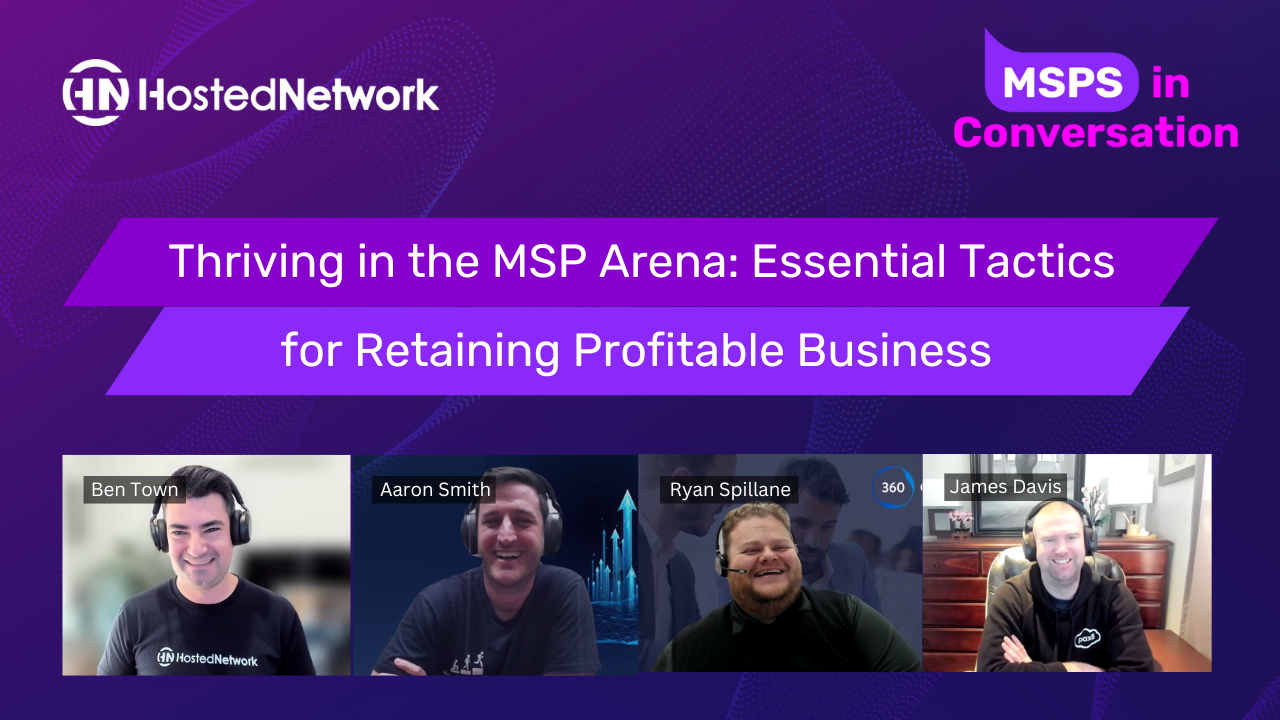
Thriving in the MSP Arena: Essential Tactics for Retaining Profitable Business

Join us for an insightful panel discussion featuring leading Australian industry experts James Davis from Pax8, Ryan Spillane from 360 Consulting, and Aaron Smith from Morphability as they delve into the topic “Thriving in the MSP Arena: Essential Tactics for Retaining Profitable Business”.

Thriving in the MSP Arena: Essential Tactics for Retaining Profitable Business

Join us for an insightful panel discussion featuring leading Australian industry experts James Davis from Pax8, Ryan Spillane from 360 Consulting, and Aaron Smith from Morphability as they delve into the topic “Thriving in the MSP Arena: Essential Tactics for Retaining Profitable Business”.

Discover key strategies and actionable insights tailored for Australian MSPs with the aim to bolster client retention and drive sustainable profitability.

What we’ll talk about: • Leveraging technology advancements to optimize client satisfaction and loyalty. • Addressing common challenges faced by Australian MSPs in retaining profitable business. • Implementing effective communication strategies to foster long-term client relationships. • Discussing the importance of proactive problem-solving and client education in reducing churn. • Exploring innovative pricing models and service offerings to increase client lifetime value.

Key Takeaways

Retention Is About Keeping the Right Customers

Healthy MSPs don’t aim for zero churn — they aim for 100% retention of desired, aligned customers. Losing unprofitable, misaligned, or non-paying clients is often a sign of business maturity, not failure.

Revenue Is Vanity — Profit and Cash Flow Decide Survival

High revenue clients can still destroy margin through over-servicing, late payments, or poor scope control. MSPs must regularly review customer-level profitability, aged receivables, and true delivery costs — not rely on gut feel.

Business Conversations Drive Loyalty, Not Technical Reviews

Customers don’t want quarterly technical audits filled with metrics they don’t understand. Retention improves when MSPs focus conversations on business outcomes, risk, efficiency, and growth, not tools, tickets, or speeds and feeds.

Relationships Must Extend Beyond a Single Contact

Relying on one champion is risky. Strong retention comes from multiple relationships across the organisation, including executive sponsors, so the partnership survives role changes, acquisitions, or leadership turnover.

Growth Comes from Expanding Value, Not Discounting

The easiest revenue growth comes from existing customers — but only when MSPs clearly articulate value. Uplift comes from aligned add-on services, security controls, productivity improvements, and trusted advisory, not price-driven upsells.

Read the full transcript

Auto-generated from the episode audio — may contain minor errors.
hey guys welcome to today's msps in conversation uh today we are talking about uh essential tactics for retaining profitable business um as always uh today's session is recorded uh we will be Distributing this uh as a podcast it's available on our YouTube Vimeo Pages Etc um if you have questions during today's session please put them in the chat uh we always love uh to answer things as we go um big thank you to our panelists today uh fuzzy Ryan James and Aaron welcome back for two out of three and welcome Aaron for your first time thanks for joining us um very quickly a little bit about hosted network if you don't know already uh hosted network is a wholesale cloud and Telco provider we started as an MSP and our value prop to you guys is that we think like a MSP we're the only connectivity provider in Australia that solely deals with msps uh and so all of our guys when we're troubleshooting and supporting supporting you and your customers are acting as a true extension of your team if you'd like to know more feel free to reach out to us but today we're not here to talk about us we're here to learn from our panel of experts so Ryan James and Aaron welcome again guys um would I could I get you just to do a quick introduction um I'm sure everyone on the call will uh have seen your faces on LinkedIn and at events and things like that but uh Ryan who are you well that's a hell of a question isn't it Ben um look look most people know me as fuzzy uh name is Ryan Spain ran an MSP for 25 years as correct Solutions uh helped someone else on the panel here come through and uh turn into a sales manager sales director C manager and and whatnot but yes sold that in 2021 exited in 2022 and now run of the company of 360 Consulting where I help uh and basically consult back to msps on uh profitability merge and Acquisitions appraisals uh and long range strategic advice so it's kind of very short version of what I do thank you and James well I'm James my I'm director of Academy for paap which basically means that I'm responsible for helping the partners out to grow their business businesses and improve their efficiency so they have more sustainable businesses and they buy some more licenses from us um and I've just I've just realized as fuzzy was saying how long he's been doing stuff that I've been in the industry for 13 years now I've been coaching and working with technology businesses around the APAC region for seven years now so I'm looking a lot older than that picture that's up on the on the screen so I'll I'll run with that one I was going to say I think my um my LinkedIn photo is about 15 years older as well but anyway occasionally we should probably update them Aaron welcome thank you thank you for having me uh my name's Aaron Smith I had the pleasure of working for uh F fuzzy as he has outlined before for the better part of 10 years um I'm not sure if that relationship and working for him has ever really stopped but you know it is what it is um we you know we grew basic basically I walked in the door as a cocky 29y old and basically suggested that I'd be his future sales and marketing manager an hour later I got offered a job and a away we went so um spent the better part of uh that 10 years getting look engaged ultimately with many msps through a number of different programs learned my way got slapped on the slapped on the back of the head and paded in equal measure um to the point where now you know postacquisition spent a bit of time in a rather giant business learning what not to do from a how to keep customer is Happy perspective um before I finally wanted my soback and decided to start a business called morph ability um my role here is uh ultimately stepping inside msps helping them build out their own sales teams uh build out the structures the governance the people management you name it it's there um most of you tend to be ex technical people or technical backgrounded so sales is often a foreign concept and that's where I step in thanks for having awesome welcome all right so a bit of a question we don't normally do this but we're going to do a couple of little different things today um a question for our audience and I'd love you guys to pop this into the chat and we'll try and answer them and sort of come up with some ideas what do you see as your biggest pain point when it comes to client retention I'm going to ask uh our panelists later some of these bits and pieces but have a bit of a think about that um and you know if if you're willing to share post that in in the chat and we'll uh we'll go from there um wh That's the wrong slide uh with that in mind let's uh stop sharing and we will jump into it let me just get my question deck up so all right um fuzzy Ryan I might start with you if that's okay uh and then you know uh James and Aaron if you could also jump in but um what does good C customer retention look like in your opinion if we're talking a percentage then look no more than 5% churn I would say ideally less than that would be great uh but let's also be honest about it that you are going to have some churn across your customers um look 5% I'd say would be nice uh 10% if it's really bad uh but yeah look 5% or less would be what I'd want to see 2 or 3% it would be great but let's let's kind of come back a step and let's be honest about it everyone's excited about winning new business but it's so much easier selling something to an existing customer than it is to go and sell it to someone brand new uh brand new people you need to uh basically Court them get into a relationship with them go and have dinner with them and whatnot and get them used to the idea of using you and working with you where existing customers selling a new product to them or a new solution or a new offering is a downside easy again we've spoken about whites space sales and what not in previous msps and conversations so go have a look at those but yeah look I'd say so answer as answer your specific thing I'd say no less than 5% churn would be what I'd be looking for I um hello I I like the way that we defined it during one of our sort of strategic planning days we had 100% retention of desired clients and that for me is the important part if you're engaging with them right you're talking to them consistently you are having intelligent conversations at at a strategic an operational and a tactical level you should theoretically be able to retain 100% of the desired aligned customers you want to yeah and I think following off of Aaron where my head goes at to what good looks like it really depends what you're trying to achieve in your business um what what what Solutions you're offering how are you wanting to engage with the clients what sort of clients are desirable uh to work with and then that will structure what good looks like from there if it is that long-term deeper relationship type stuff then it fits into a lot of what Aaron's talking about of should be able to keep ahead of them and and lead them through if it's more transactional then it's less about the retention rates you the numbers that you were talking about fuz they can go up to 10 12% and it's still healthy because you're looking at a transactional turn rate um there's no right or wrong answer it's what's right for for your particular business I think everyone keeps forgetting that because everyone keeps trying to do the cookie cutter approach and all that is is a race to commoditization well everyone thinks everyone is the same and that's the catch basically what you're saying there James is yeah if you have a transactional business that's just doing pieces here and there 25 or 30% could be okay and that's not a problem if that's your business model but if you're a traditional MSP then you need to understand as Aaron said is that are you tying things back to Target customer profiles or customers that you want then yeah you want that to be 98 99 or 100% I like the idea that it is 100% but let's be honest about it customers do go out of business or they buy each other and you don't always win sometimes you win other times you don't so but yes a very high rate of uh of holding is really important I think the final bit of that line that we put on to that particular one I just mentioned was within our control to allow for exactly that some things you can't control people are going to get acquired people are going to go out of business um but that was the final part of that line was within our control the last thing you want as a client to leave and you to have absolutely no idea about it um you should be on top of every single one of the customers that you expect and want to retain if that's your intent I guess the um uh the the question also around the profitability side of it right so what does good look like from a profitable side so at what point just what maybe maybe we flip the question on its head what does bad look like from a customer that you don't want to retain what are some of the the things that could be impacting you know what are the red flags just flipping it on its head anyone the the one thing we there's a handful of different lenses on that one for me number one is we we often washed our clients it's not just about the revenue defense um we also looked at um client pain levels and we actually ended up scoring customers in terms of where we wanted to lean in and that desired customer piece we scored them on whether or not there were pains in the ass to be want to want of a better description if there were a high pain but High revenue or high margin then they were okay if there were high pain but low margin low Revenue then they got our attention and they got our attention from are you a customer we want to continue servicing and that took a handful of different lenses in terms of do I need to review our service to make sure we're not over servicing those people do I need to review my actual product margins to make sure there's enough built into it do I just need to review your pricing because there are some customers who you can go into who are absolutely painful to deal with but bump their pricing up by 100% And they're totally fine I I think it is as simple as that too I always resonate with the the the old saying of revenues vanity profit sanity and cash is king So a lot of the time I see I like that even if we've got um what we see as profitable clients if they're not actually paying us they're not even clients um just to put it out there the amount of um amount of partners that I see out out there in the wild that tell me that they've got these great clients and then I go and look at their age receivables and these great clients are on that list and have got outstanding 609 120 days they're not clients they haven't paid you um and I think that's that mentality of um understanding who you want to work with but then actually putting those parameters like you said Aron around what are the pain points what actually makes a good good not just a good client because again it depends on their um business model if we're trying to be that sort of um technology um advisor what we're looking for is a partnership so it goes two ways um a client is more of a long-standing relationship ship pays you customer is transactional so this language is very important this in this sort of thought process as well so I think just understanding again coming back to what to what we want to achieve that then lets us actually highlight all those red flags because some red flags aren't as necessary in certain business models as others um and and it flips flops so there's no writer wrong again except for the fact if it's not profitable or they're not paying you they're pretty easy things I guess that's the lwh hanging fruit at the very least right looking at those that that sorry M I was going to say why it's it's I I love what you said there James around customers that are not uh that are not actually paying you and really not customers but what is it it's a rhetorical question but why is it that we are so darn like hard on ourselves or we will we just not put people on stop or will we not cancel some of their services or suspend some of their services is it we just don't like the hard conversations is it we're just too weak is it what is it because it's again you're right if they're not paying you they're not a bloody customer but how do yeah how do we change that in this industry that we're a professional industry and if you don't pay us we're going to turn you off and we don't care apart from all the conflict side and everything else I think there's there's a there's a key element here that that's uh constant it's the money in the business is paper money and a lot of what we do is theoretical and we don't value our time and I look at I I was hardened by working in the Trade Services you you slug your guts out you don't get paid you you really feel it where in our businesses we sort of feel it but it's it's more intangible pain and we don't and we don't put it up there on the pedestal of we do work well where's my money like that's all the other stuff I think is just symptoms of of the way that we trade our money in general I think I think to Echo that further I for those of you listening in um you need to be aware of the value that you provide and the rate at which that value is commensurate that you should be charging you have spent years sometimes inside your business learning your craft honing your craft you spend years studying the technology rate of change is so huge that if you are not billing out your own time and you're giving it away for free you are just simply undervaluing your own service and The Time Blood Sweat and Tears that you've spent under desks learning your craft and honing your craft and if you're doing this properly I I don't I don't argue with people about my rates I've spent the better part of 25 years in this industry honing my craft in regards to sales the rates are what the rates are they are you're not paying for my time you're paying for the value that I have learned over the course of of time and your clients should be having the same experience from you they are paying for the value you provide to their business and not for a direct trade on a hard cost against a product so with all that in mind what practical things did you do in your msps or that you've seen other msps do to identify the customers that are I don't know potentially you know time sync or a profit sync you know the cancer you know to allow you to focus on where you should be focusing are there any things that that you've seen that stood out to you this was probably the hardest piece that came out for us but at some point in time and we didn't have a dedicated Finance head of so it fell to me to learn this it's one of the reasons why I got the skills I did in some areas but we CAU to a point where we like some of these clients are not profitable and we don't know why and so we started to understand the systems we were using connectwise was where we were at at the time and we dug into profitability reporting and that became a monthly activity for us where we reviewed the past six months worth of profit we had a rolling gauges and and Reporting on that and that behavior was a massive change over to us it' fixed our product catalog we found a lot of the products we' built had labor built into them we needed to remove that because the labor obviously comes out the agreement but there are little bits that we found along the way in terms of best practices of how we built products how we over serviced and it was where by just taking that lens of individual customers and whether they were inside a window of profitability and two parts of problem too little profit but also too much profits a risk as well you've got to get that balance right and it was just that act of building a profitability review process that gave us a monthly lens by which I had to bring to the leadership team three profit focus customers and we then started doing with products as well but those three profit focused customers were where I then dug in or had service dig in or Finance dig in wherever it was that the prod problem was potentially it was always service first to make sure we went over servicing um but otherwise that was that was the best process we put in play I think interesting James have you seen anything uh I've seen lots of lots of things um the first thing I'd say what not to do is just use your gut um and the reason why I say that is a lot of a lot of the time we see equal we see revenue and cash and don't equate that to profitability so a lot of the um lot of the owners that I see are go oh who are your best clients and they they'll know who are the busiest clients um and the biggest clients but they they will often highly overestimate the profitability so that that gut feeling on that side we're too positive but but a lot of the time our gut feeling on who the bad clients are are 100% correct we're just we're just avoiding it and I think what whatever system you put in a lot of it is just initially to get over that fear of the unknown and give you comfortability that you're making the right decisions um it's not it's important and it's how you Empower others to do it in the future but it's not actually that gamechanging um a lot of the time in the short term because you know who your bad clients are why do you need the data it's not it's not going to change anything all it's going to do is completely reiterate what you already knew and what you're feeling um and you're often better off spending the time focusing on dealing with that faster um while you work out what good what good actually means in your business um you know you can te your clients however you however you want um and there's that typical ABCD type approach based on Revenue often I'd recommend like what you you've been saying Aaron is adding parameters to it so it isn't just Revenue there's other there's other quantifiable things that can can help that and often what I say is if there's an e we should always have an E Class they're the one they're the clients that should be gone you shouldn't have any e clients we call them future X clients I like it instead of e for that reason but that's fine I think it's just backing yourself a bit more is probably the probably the main thing there's a lot of fear there around but if I get rid of this Revenue then what am I going to do to replace it and I think the bit that you often miss or most of the owners I talk to Miss is that by getting rid of that Revenue you're actually saving hell of a lot of service time and effort sync that can then actually go back into servicing the customers who deserve and should be getting your time and attention which so just on quickly I get a bit um factious with some Partners around this and because they're worried about the loss of Revenue no I always on that at all n you know me um Revenue how they value businesses well it is it's what the cash in the bank right um but are we are not not for profit are we running by surpluses and and and shortfalls no we're not we're profit we're for-profit businesses so having revenue for Revenue sake adds adds thing um and this is where I keep going back to from a financial perspective you've got to change your mindset it's not about the cash in the bank because that's the cash flow es and flows it it changes what actually matters is what your business performance is and the profit that you end up with um a lot of us fail because of our lack of Financial acument and that's why we make a lot of these gut feels I think the other fear piece is and and this comes up with multiple clients is that there is a fear when you come to increasing prices that you you either should have done it earlier or you you're wanting to be the nice guy or you just you've got to get out of that fear mindset and ultimately come into if I don't increase my prices I can't AF to pay the people that I'm working with and are working for me if I can't afford to do that then I don't have a business and the service you love receiving from me I can't give you anymore stop thinking about a a price increase conversation from a negative lens of I'm increasing my prices and start talking about it from a I'm actually now able to add better value to you stop thinking in terms of it being a bad conversation a price increase conversation is a positive one it means you're running a successful healthy business and they should be too okay so let's let's continue down that trend of thought so we've talked a little bit around you know the dead weight I'm just going to call it identifying that and we've talked a couple ideas around how to identify that how to categorize them future ex clients Etc um let's focus on the ones that are profitable right actually profitable not the ones that are you know providing a a great um monthly amount but burning up all of your Service Des resources um focusing on those guys what do we need to do what are the key things that you would recommend maybe one one thing from each of you James I'll start with you um that you would recommend that hmsp should be doing to retain that business understand your clients any anything else is irrelevant because it's it's what the clients need you can build whatever technology whatever mechanisms of Engagement etc etc if you understand your clients it's as simple as that that that's very prise I like it I was just going to say talk to your clients exactly that's what was in my head talk to your clients and again as James said is yep know what they need and talk to them often until they tell you let's be honest until they tell you to buger off and stop ringing or stop dropping in for coffee or instead of doing something like that how rare does someone ever tell you something like that just talk to them too often than not we're busy and I get it but at the same token we think oh they're busy at the end they don't want to speak to us but it's the amount of times by going out or dropping into a client unannounced or just even just account managers going and doing what their process is which we'll talk about later but all of those things just speaking to the client often enough you find out what they're doing where they're going what the challenges are in their business go and solve those problems and then tell people that that you've solved those types of problems and you'll pick up more businesses more clients it can be that simple I I might be a little anti-tech sales jaded but you know I'm not anti-tech by any stretch of the imagination but stop having technical audit conversations every quarter with your customers it's the stop it I don't want to talk to you about that what they want you to do is show an interest in their business there are two questions that came out of um a brilliant client success account manager whatever you want to call her she sat down when she first got the job with every single client in her remit and asked what makes it hard to do business with us and what do you like about working with us with a with a flip side of that and what she gathered out of there were a bunch of improvement opportunities and the the final piece that I'd offer to that is exactly what these two have just said if you're not sitting down there talking to your customers going what's going on in your business what's important to you for the next 90 days where where's the business going not tactically not technically what's the business doing what is important to you and then sh and listen I know it's hard for me but you know you've got to stop talking at some point at some point Darren needs a drink of water or some food or put another foot in the put another shoe your point about the technical side I think it's very important to highlight again apart from clients don't want to hear or or care that much about it it stops US seeing a whole lot of opportunities to actually help the client um we're very focused especially with the cyber security stuff at the moment we're very focused on technical risk we're not looking at we're not looking at ways to help them increase their efficiencies in their business how they how to mitigate their business risks or how we can enable them to scale and grow they're the things that the owners and CEOs care about in their businesses they don't care about low-level technical stuff but that's what we keep focusing on and and we've got to stop it part of we all technical a lot of us are technical owner Le organizations right I remember you know I've mentioned this on on these calls many times but when I first started out selling Cloud products it was all about the iops and the speed of this and the speed of that I didn't sell much took me ages to real way too long unfortunately I wish I had heard this conversation sooner have a bus actual business conversation just hey what are you trying to do what's working what's not yeah sorry Aon what are you going to say I remember mate I the horse is here it's okay some sort of distraction cool okay so now the the whole concept of qbrs do you think they help well maybe that can be a black because because I'm I'm leading this question to to James a littleit I'm gonna I'm gonna I'm gonna I'm gonna I'm gonna just say yes if they're if they're full of the right questions and they don't have to be quarterly they just have to be at an appropriate Cadence we need call theong qbr stopped calling them qbr I started call I like there's a there's a mob down in Melbourne who I'm not going to give a free plug to but they've got a stupid logo um and he'll laugh if he says this um the the they started call them strategic business reviews and I think that's the important part of it qbrs are not relevant strategic ones are go James here's your chance that's that's my rant is so we get caught into this qbr thing it's like straight away so all of a sudden we go we need to deliver this quarterly we don't know what needs to be in it but we need to deliver it quarterly we default to a whole B bunch of Health metrics that the clients don't care about we need to understand our clients again so yeah if it's a strategic Business Review if we're deal de with mainly micro and small businesses they're not working strategically that often so let's not frame it up that way and let's not try and deliver it quarterly because they're not paying us enough to do that um but we might be working with larger midmarket clients and that makes sense um this scales up and down but the concept is around leading your clients from where they are now to a next position and and taking them on a journey and that again that's different for each each business it's not and each organization like our technology businesses that are delivering it we don't have all the same clients they're not all on the same maturity levels they're they're different sizes different verticals they have different buying behaviors etc etc we need to understand that and then create a system that works for our particular clients taking the cookie cutter approach again is a road to failure every time yeah it depends very much on your client when I when I build out that segmentation that we talked about before I look at revenue is absolutely a lens I look at recurring revenue is a lens pay to deal with that person's a lens but then I start washing that against um how much time am I actually going to spend account managing these guys am I doing it weekly am I doing it monthly am I doing it quarterly what is it that that factors in and how much does that actually impact my true profitability against that client because if you start to then lens that with what is my cost to Ain that client from a sales perspective you then can start to really understand whether that client if they line ball at service you're bleeding time if you add account management into that unless you're balancing accordingly um yeah but again if you're having the right chats the value should shake out of that tree because they'll come to you as their trusted advisor for all the projects and look I I'd even add into there there's by anual and manual as much as everyone tries to do something quarterly it depends on the customer a 20 seat manufacturing business probably wants to see you every 6 to n months maybe even 12 months because not much is going to change in their industry unless they unless they're getting a new piece of software or a brand new machine that is going to bend some metal for them or do something specific that's going to have a network cable on it at that point in time they probably want to talk to you outside of that their business probably isn't growing at 20 or 30% a year it's probably relatively stable and they don't want to spend spend time with you let's be honest about it most it companies is going to go on talk speeds feeds and how good their service response rate was and all this type of stuff and hey we saved you from this many links you clicked on and I get it you need to do some of that stuff but that's not a strategic meeting that's just some compliance reporting you send them every month or whatnot you just get that stuff done anyway but I think yeah you need to understand what those customers are I remember some like one of our biggest customers I was there once a week now we would do an operational meeting once a week and probably once a month we would do a strategic meeting but that customer was 250 seats now again you've got to Define what that's right for the size of customer and the industry they're in that 20 seat manufacturing company again probably doesn't want to see you that often a normal client probably wants to see you maybe once a quarter if you're asking the right questions but don't get don't get surprise if they want to cancel one of those a year because it's again sometimes you need to let them cancel sometimes you need to chase them up and say no we can't cancel it we can move it though and and and get another time you need to make sure you still have that FaceTime to so ask the questions what's happening in their business what's happening in their industry what can we be doing better and hey why not ask them is there anyone else you know that could actually do with our services too ask for a referral at the same time if they're happy so foreign it is I what I'd say as well on the back of this you know once once you're working out what's right for the clients is how are you actually recup your revenue or margin off it like how's this actually being paid for we um we all in this industry see account management as a one blanket coverall term but you ask every individual in this call um that's watching us what account management means and we'll get 30 different answers um and we need to know where the money's coming from to pay for those resources is it purely to um prevent churn is it to generate new business is it to provide ongoing advice and and Consulting what is it and that's how we write our engagements as well um and a lot of people in this call as well probably working with smaller smaller clients so it's not necessary but I'm saying to see a lot more msps work with the midmarket and they don't have a service delivery manager that's there for contract management and so we get a whole lot of different issues so if we don't actually know what we're delivering how what the value is how we're structuring it it's just going to be it's not going to be successful without that sort of structure behind it the other thing that's worth noting on that one just to I suspect bring this to a a close is that don't underestimate the value of a five minute phone call to fill someone's cup because you don't need to go and sit in front of somebody every quarter if they are that annual person that Fuzzy's talking about a five minute phone call once a quarter to just shoot the breeze about family some of the best account management meetings I've ever had I sat in front of people with a coffee in hand or even not had 55 minutes worth of just absolutely shooting the breeze and then 5 minutes before [ __ ] we're out of time you go we probably should talk about business now now whether that's a five minute phone call or whatever it looks like or a pub visit doesn't matter don't underestimate or or you know don't underestimate the value of a f minute phone call to fill someone's cup I like that also going to add a little bit from my side um my with my marketing hat on um is that quite often people don't see the value in having a casual conversation and learning about the individual not just the business so yes we've said learn about the business 100% what pain points are they they focusing on but depending on who you're talking to within the organization if they're if they're a decision maker if they're an influencer think about the buying Persona right and how you're going to fill the gaps where are their interests where do they get their information and start to take notes of these things because that'll influence where you start to look for those High profitable clients because then you know which lakes to be fishing in versus trying to fish in every single lake so to get more targeted as you go we had a section at the top of our note taking um when we were in one note kept it simple at the top of the one note was a segue section where we just took down the little things that started the meeting it might be oh my kid played for or something went here or someone visited you know whatever that little bit bit of personal information was that we got at the start of the meeting as you as they start to open up and bring you into their fold and trust starts to build take that data down because if you go out the next quarter or the next half or whatever and go hey how'd that soccer game actually go right one one potential client of mine talk about the fact that his son was playing for Melbourne FC against Arsenal or whoever it was coming over a couple years back I had that noted down 3 months later when I when I checked in him because he'd said not don't touch me for another three I went cool I'll see in 3 months I asked him how his kid was going do you think we we jumped a progression level by actually remembering absolutely we did yeah I think that's that's an important aspect of client retention is that it's that relationship retention which we're going to Pivot a little bit around that piece perfect segue so we've built a relationship we understand the business but the individual that we're dealing with ups and leaves what a some thing and we've all had this happen to us when I ran my MSP this happened to us multiple times um you know some big contracts and it was just because a new CFO kind of came along and they dealt with someone else whatever the case might be what are some things that we can do to make sure that we are relevant to that organization beyond the relationship or that single relationship James I might start with you oh there multiple things I'm going to start with a factious one like always um this is why contracts are valuable in one part because it what we've really got is a busines to business engagement right like the relationships with small business people relationships are super critical but this is one of the reasons why having a contract in place is useful because a new a new manager can't just come in and basically dump you in 30 days we we've got an opportunity to reset the relationship ship um and that's not something I'd underestimate outside of that it's providing information and having multiple relationships across the company it's not just having one a key person we don't just rely on that practice manager at at our medical firm we need to know all the different parties across it not just not for just to maintain a relationship but open up new opportunities this is how we help them increase their efficiencies reduce their risk and enable them to scale and grow we can't know that from just one person anyway they don't have all the answers people have different pains and challenges across it so I just start with having multiple relationships and a contract pretty 101 we uh we never had long-term contracts so we ran on a 90-day get out so for us it was 100% down to relationship and multiple levels I think one of the benefits running an MSP is that and you guys are sticky by default in the sense that you know where all the bodies are buried and you know all the secrets are um so from that side of the fence you're already having multiple parties inside your business having multiple conversations with multiple people in any business you serve so you are by default spread broader than a traditional sales relationship coming out of a you know hosted Network probably a perfect example traditionally that's a one-o-one relationship decision maker with a account manager whereas we as an MSP we talk to everyone everyone needs support everyone needs assistance so we're already more sticky in regards to our breadth of touch the only other thing that I'd throw into the top of that would be if you are not talking to an executive sponsor is what we call them if you don't have a relationship up at that that top level and your key decision maker might be an IT manager your owner director CEO managing director whoever is the owner of that business must maintain that relationship while your account manager keeps dealing with the dayto day and if they can straddle both sides of that that's fantastic also but we retained a lot of bigger businesses when that run rate person changed because either Ryan or I maintained that sea level relationship on the way through I like it Ryan any commentary and look yeah look as James said having having multiple touch points having your engineers having getting on wor well with the day-to-day users as well as the primary contact your account manager and your service manager should always be dealing with your primary contact as well and then ultimately you need to be dealing with levels of the SE Suite A lot of times technology generally reports under the CFO uh even though they generally don't like it it's where it normally goes to so you need to have a good relationship there and what's the worst first thing that happens when a CFO changes they want to bring in the people they know so when someone does change at that level or CFO your primary contact you need to be there face to face not just over a teams call not just an email saying hello welcome if you know something's happening you need to get there and actually meet them face to face and become invaluable show them say talk them through everything you do say okay here are the initiatives that we've been working on with your predecessor or whatnot and these are where we're up to with those things here are some of the thing initiatives that we wanted to work on in the next two to three years show that you are strategic show that you are better than just the the average it or MSP company out there show them that you are better than the the incumbent person that they know um from their previous op operation or previous company that they would like to bring in make sure you get in there quick you can't get in there two or three months later two or three months later they'll already know what they're spending with all the key suppliers which generally technology is one of those and will then already be speaking to someone that they know to make sure they're spending the right amount you might as well go and have that honest and direct conversation get in there early okay um with that in mind uh this kind of ties in next set of questions ties around our last msps in conversation uh that we ran around compliance and ISO um and we were talking heavily around that they are an area as an MSP that can be used to demonstrate value so if you're ISO certified for example um what types of things and and maybe there's you know current trends or what whatever it is that you guys want to comment on um that MSP should be thinking about to remain relevant and what should they be doing to demonstrate that value to those customers James um again it comes back to understanding your clients so depending where they're actually at know you could you could get on the AI train as an example if they don't have decent infrastructure and they don't have a stable environment they're not going to be open to that they're not ready for that just as an extreme example so the technology itself we need to keep up with that's what we sort of do okay we need to understand what their business Trends are what are what are our industry what are their our clients industry verticals what's happening to them what's their business challenges so them can bring the right technology um and if you simplify it down what we really need to be good at is the governance the the compliance side and bringing the digital transformation down to the S&B space uh it's that going back to that managing the risk increasing efficiencies and and enabling scale and growth there's so much different technology what they're really looking for is a technology advisor that understands their business and brings them the right things and leads them on a journey that's right for them um outside of that it's all sort of noise and irrelevant if you get caught up in the cyber security Trend what the AI whatever the buzzword are cloud back in the day right like clients like care I remember when it was backups oh now you're triggering me um it's it's it's understanding it's understanding those and being able to have a leading conversation with them to help them form their strategy and their vision for the future and it doesn't need to be that complex but for a lot of us it is because we're stuck at the infrastructure layer and what we really need to do is Elevate ourselves up to understanding the business challenges which means we need to understand their application layer from a technology perspective but we're all too afraid of getting involved in that and that's what's going to create a whole heap of client churn is already is I'm already saying it I I think to that point one of the best questions that I know we ask is what's impacting your people how are we keeping you know what what is stopping your people from doing the job that they need to do if you ask that question and that question alone you'll get a far greater understanding of the Improvement opportunities inside their business that they're looking for because if they're if you haven't asked the question they're already looking out there I think the best number I got recently was I think by the time someone approaches you as a net new business I think there's 70 odd per right now through their decision making process they've already Googled they've already probably hit up all the all the possible Avenues they can their friends their family the TV that well people don't use TV for that anymore but like they've already done the finding and if you're not the first phone call the first phone call once they call someone 84% chance 85% I think it is chance of winning that deal if you're the second phone call you got less than 15% chance according to current marketing statistics it's one of the first questions I'd be asking are we your first are we your first call or we your second you want to know how not to waste your time on new business are we your first or second phone call and why are we your second phone call all like it pull that thread we did used to ask if someone you come in um we did used to ask are you just needing to get a third quote or a second or third quote for something and we used to we used to say look we'll give you one there's no problems in that but please just tell us are you are you actually actively looking to change or do you just need some competitive pricing and I look what maybe 40% 50% would you say Aaron were actually would be honest back with you but at least with those you knew you just go you went in and put some pricing down you just did a quote you knew you never going to win it you just sense it anyway to at least take the box for them um i' look maybe one in every 20 or 30 they might come back to you because hey you were responsive you asked the right questions and things like that but at least you just got it out and you got off your list you didn't then Mark it as if it's a lead as if you're going to chase it up and spend a lot of time on it because that's the biggest thing at the end of the day they need to get and sometimes we do the same thing in what we do in our businesses we not need to get a competitive price to understand are we trying to get the right thing so that's okay just be aware of that um or if you want to play the game and I know this is being recorded you just go in at Cost Cost Plus 5% and put all the pricing really low and screw over whoever the incumbent was and yeah the business it's profitable next it's profitable next year when you bump pricing up by CPI profitable for someone else that's what it is L leer yep what you guys have said like we're joking about this but this is happening more and more in our industry um and and it's not just um it's not just people just cutting cost I you know we've gone through it in the past we've we've been around for a long time seen these sort of Cycles where a big guy will go we need to come into the SMB space let's try and do a land grab it's never worked it's going to happen and it's going to work this time because automation offshoring the standardization of Technologies at the point that can easily deliver um low cost uh quality generic services at this point and so if we're not providing value that cost comparison is going to be too lucrative to turn down and this is where to your point Aaron around um people are making buying decisions and if we're not talking to them first someone else is going to this is what's causing a lot of change churn at the moment like we you fuzzy mentioned early on that there's some things we can't control we can't control them going out of business we can't control them being acquired okay so that that's happening that's happening more more and more as um the ATO is cracking down on um on zombie businesses um there's more um exits going on in um in businesses because the Baby Boomers and older gen X's are starting to sell out there's also a bit of a tightening of the economy so we're seeing that pendulum back to bring stuff internal but we're also looking at um that cost cutting of the traditional Services because hey it's all the same we all talk the same why not get it why not get it cheaper but that's only about 40% of the churn that I'm seeing out there in the environment 60% is down to two things we're not talking to them properly and maturely about a cyber secur security Journey or we're not helping them digitally transform that's 60% and so I'm seeing I'm hearing a lot of people losing a lot of business lately but I'm seeing the winners and they're winning big time because not only are those clients churning they're churning and spending more money than what they did before and so what that means is as an industry we're doing a really bad job of actually talking to our clients finding what they need staying ahead of them being the person that's proactively coming to them and leading them on a journey we're all sitting there being super complacent waiting for them to come and basically we're treating them like we're autot takers and that's reflected on the churn and it's not just me that's seeing it like I see hundreds and thousands of businesses in the region Mar Microsoft is seeing as well with the partner of record changes they've never seen as many partner record changes in the 365 um Cloud environment since it started so that that should tell everyone something that we've gotten super complacent and there's money to be made and and we who we're not winning so who is the ones that are doing it right thank you for validating the topic of today um perfect Direction though because I wanted to talk around um uplifting of revenue from existing clients Ryan you mentioned earli on that that's obviously a lot easier sales cycle it's a lot easier conversation if we're talking to our clients hopefully we're not losing them well how do we get an uplift out of them James you just mentioned that if we've got a someone else is talking to our client we're going to lose them but they're actually going to potentially spend more right to their budgets are there right so um focus putting our eggs in the right baskets or fishing in the right Lakes it's like I mentioned before um how can we drive additional or uplift Revenue opportunities from existing clients while helping to retain them and I'm sure there's a bit of crossover here um Aaron can you take point on that one we um if you're again to the point of if you're not having a regular review of the services that you offer and finding aligned services that you can either at attach there's a handful of different areas that you can rate increase is an obvious one to to increase your your profitability or you the retention may be less so but if you're not reviewing pricing for clients on a regular basis you should be at least every 12 months from an added value and added Services perspective you need to be listening to what they're actually saying and things that actually align with what you do and how your business operates and security is an easy one to tick the Box on because at a controls level msps are all about controls and so adding in a controls based security something is an easy way to add on attach recurring Revenue Services productivity is the other one Microsoft's not going anywhere um you know if you haven't already taken people from business standard to business premium there's the next sort of value ad but make sure when you take them from standard to premium you understand the value you can pull out of that product as an example because if you go and uplift a license and just go well there's a price change but don't then Implement some of the things that they're getting as value you're you're just gouging so you need to be clear make Microsoft very happy you're making everyone very happy including yourself because you'll be taking the money up until the point they realize it and go well you've just bumped my rates the hell am I getting for it other than office it's it's a different conversation you need to be having and I keep coming back to Value stop thinking about price it's actually not about the price if people are asking you about the price of something you haven't explained the value well enough you have not articulated and explained what they're getting in exchange for that if they're talking about dollars and cents they're either really low maturity or you haven't done a good enough job of explaining the value and both of those problems need to be fixed run away from low maturity unless you could increase them and the other side is all on you guys add the right products to what you're doing and you need to be reviewing what's the right products for you because for some it's security for others it's added Services I'm going to do the shameful plug of hosted networks here but adding Data Network you know the sorts of services that you can plug in and take a clip on an invoice to your customers for an additional Revenue stream that's got good margin built in there you go Ben you're welcome um that piece there is exactly why ultimately you should be thinking about what are low touch attached products that you can add into your customer base that increases your revenues your margin for very little effort they already paying the text to do what they do adding internet services adding voice Services adding those sorts of things is easy adding more margin on Microsoft easy you know those sorts of things should be in your wheelhouse of your low cost ad products and that's where you need to start okay Cloud backups telepan all of those types of things yep back backing up key uh Key Management PCS or laptops those types of things yep we we added we added a a higher Revenue but higher cost Services as well you know consulting services and those sorts of things you should be just building for those if you can make them into recurring Revenue items even better there are always products and services that you have the skills inhouse to deliver and that's where you need to look first because if you have to go and build it or hire for it that's high cost high risk and there's a balancing act there that you need to need to be achieving off off the back of off the back of what you just said to me there's there's 12 major technology categories um I won't rattle them off all now but we've only got five minutes so I probably don't no there's 12 categories at most most um Technology Solutions Partners out there are only touching on four or five areas at most so to your point Aon around expanding our our footprint it's not just a great opportunity for us to increase our margins and things it's actually what our clients need yep they they need us to get more things and they need us to advise and govern and and do it but to your point we don't actually need to build it we we all get in this mindset of oh we need to build the capabilities to deliver XYZ we don't there's there's actually three options when we're looking at new Solutions we can build it we can hire people in we can build a practice we can work it all out um you know cyber people got excited about sock and we we all worked out it cost a million bucks before we could get anything going but there's two other approaches there's acquisition so if we go there's a strategic opportunity here well rather than spend a million dollars to build something why don't I pay two to buy a business that already does it and already has clients etc etc but also and probably the the the most logical way for everyone that's watching this is partner like there's a there's so many specialists out there in these technology areas they don't want to own the client relationship they're not good at it so they're not going to come in and steal your business but they're very good at their technology specialist area so they do projects they'll have specialized manag Services all of a sudden we can sell a project without having to worry about delivering it and get some margin and there's probably recurring services that we can sell and get a clip so not only are we making some some money without having to invest a whole heat we're delivering stuff to our clients that they actually need and we're the ones bringing it to them so again to your point Aaron we're delivering value and that value doesn't need to be that we deliver everything and we hold the keys to the castle to everything with that approach in this modern ecosystem that's actually probably the worst thing most of us can do because that will lock us out out of the majority of that stuff that reduces risk increases efficiency and enables scale and growth because all we do is provide enges of support in infrastructure management that's all we do traditionally so if we can't get out of that someone else is going to come from top down and take the lot from from our feet I think to that point just just hammering that one home the partner model works really well and I I know most of us are fearful of bringing others into our processes but I found often the best engagements I had were when you I'm using host Network as an example they've got the resources there as just pax8 as an example they have the resources there that can partner with you sit in front of you wear your T-shirt speak in your language and do all the things is these sorts of conversations are the ones that are best serving your customers by bringing the right people to the table who can serve and sell and offer what your customers ultimately need who builds it to a whole different ball game preferably it's you guys but at the end of the day that's the point if it's coming through you guys and you're building that value ad service you're providing the customer value customers don't actually get who they're paying they just want to know what they're getting is the outcome they're looking for well with with that guys we are at time um I want to say a big thank you to uh all three of you um that was some really really insightful topics um I didn't get through all my questions I never do I never do um we've talked about a couple of the different uh webinars that we've run previously and uh a few of you have been on both of these uh but these are some of our more popular ones uh so check check out our msp's uh enhancing customer experience very relevant to what we were talking about today uh and how to build a great team there are two of our most popular on the on July 16th we have our next msps in conversation coming up winning strategies navigate navigating vertical markets for MSP success so we're going to be having a few msps on the line uh and we're going to be talking about how they went deep into verticals and how they got it right um so with that um we're at time today guys uh thank you so much for joining us hopefully you took away some light bulb moments and we will see you next time thank you guys have a good afternoon thanks thanks everyone

Related Episodes

See All Episodes

Never Miss an Episode

Get new episodes and live session invites straight to your inbox. No spam — just the good stuff.